
Family-owned businesses are admired for their resilience, independence and long-term perspective. Yet behind that continuity sits a distinctive leadership challenge, shaped by legacy, identity and relationships that stretch well beyond the boardroom.
Having worked across global corporates, education and family businesses, Duncan Piper‑Blake brings both commercial insight and a deep understanding of the human dynamics that shape leadership over time. We spoke to him about the themes he sees most often in his work with family business leaders.
From corporate life to executive coaching
Duncan began his career at Procter & Gamble, where he saw first-hand how large, complex organisations really work: how brands are built, how decisions are made at scale, and how leaders perform under sustained pressure. Over time, what interested him most was not the outcomes, but the thinking and relational dynamics behind them.
“I became increasingly interested in how leaders think and feel,” he explains, “how they grow, and what enables them to perform sustainably rather than just successfully.”
That curiosity led him into leadership development. He built a leadership business initially focused on schools and universities, before expanding into a broader coaching practice with projects across the UK, US and Asia.
A pivotal chapter came when Duncan joined Dyson as the founding CEO of The Dyson Institute of Engineering and Technology. Now supporting around 200 undergraduate engineers each year, it represented the company’s largest investment in talent development and deepened Duncan’s understanding of how leadership, learning and legacy intersect within a family-owned enterprise.
Where legacy and ambition meet
For Duncan, the defining feature of family business is the depth of personal investment.
“When the family name is on the door,” he notes, “quality, reputation and long-term stewardship carry a different weight.”
As leadership passes between generations, that weight creates both opportunity and tension. New leaders bring fresh ideas and ambition, while inheriting a history that provides identity and continuity. Duncan sees leadership here as an ongoing negotiation between honouring what has worked and creating space for change.
Commercial realities demand innovation; legacy products and services cannot stay the same forever. But successful transition depends less on strategy alone and more on the quality of relationships between generations – trust, openness and mutual respect.
The emotional load of family leadership
One theme Duncan returns to is the emotional weight carried by leaders in family-owned businesses. Decisions are seldom purely commercial.
“At their heart, decisions are often tied to identity, family roles and long-standing relationships,” he explains, whether the leader is a family member or an external appointment.
Leaders frequently wear multiple hats, moving between professional and personal roles in ways that are hard to separate. Every decision carries emotional as well as strategic significance.
Thriving in this environment, Duncan argues, requires high self-awareness. Leaders need to understand how emotions influence decision making and recognise when instincts are grounded in strategy and when they are shaped by deeper personal dynamics.
This is where coaching plays a critical role. It creates space to slow down, reflect and move beyond reactivity, helping leaders regain clarity and focus in complex situations.
Generational transition and governance
There is no single model for generational transition. Larger family businesses may have structured leadership pipelines; smaller ones need to be more deliberate about identifying emerging leaders. From a coaching perspective, Duncan focuses on individuals at key transition points where complexity and expectations rise.
Strong governance is critical. Clear structures, decision rights and authority reduce confusion, particularly where family and executive roles overlap. Trusted external board members bring perspective, and for next-generation leaders, mentors and coaches outside the family are often essential.
“The challenge,” Duncan reflects, “is balancing the entrepreneurial energy and informality that makes family businesses so unique with enough structure to support confident, sustainable decision-making.”
What leaders bring to coaching
Across his work, the issues Duncan sees most consistently are relational rather than technical. Many challenges sit in the patterns between people: between peers, across generations or within senior teams.
“Very often,” he reflects, “it’s not the work itself that’s stuck, it’s the relationships around it.”
Pressure is another constant. Expectations in family businesses can be intense, with rapid decisions assumed and little space to pause. Over time, this can become cumulative and increase the risk of burnout. Coaching offers a place to step back, notice unhelpful dynamics and respond more strategically.
Looking ahead
For Duncan, leadership in family-owned businesses cannot be separated from the human dynamics at their core. Legacy, identity and relationships are not peripheral; they sit at the centre of how these organisations function and endure.
Supporting leaders in this space is, he suggests, about helping them navigate complexity with greater awareness, confidence and intention – so they can lead effectively today, and sustainably over the long term.
Family businesses face distinct challenges around growth, governance and generational transition. Getting leadership right means finding people who understand not just the role, but the values, culture and vision behind it. From Managing Director appointments to board-building, succession planning and leadership coaching, we bring the experience to help you find and develop leaders who honour your heritage and shape your future. Please get in touch with Kate Ludlow or Ginny Jones to find out more.
Sector team

Rebecca Wallace Associate Consultant
View Rebecca Wallace
Mary Few Consultant, Head of Scotland
View Mary Few
Ginny Jones Consultant
View Ginny Jones
Kate Ludlow CEO & Consultant
View Kate Ludlow
Related Insights
Insights
Board Talk: The Next Twenty-Four Months: Boards and the Speed of AI
View Board Talk: The Next Twenty-Four Months: Boards and the Speed of AI
Insights
Lessons on Leadership from the World of Sport
View Lessons on Leadership from the World of Sport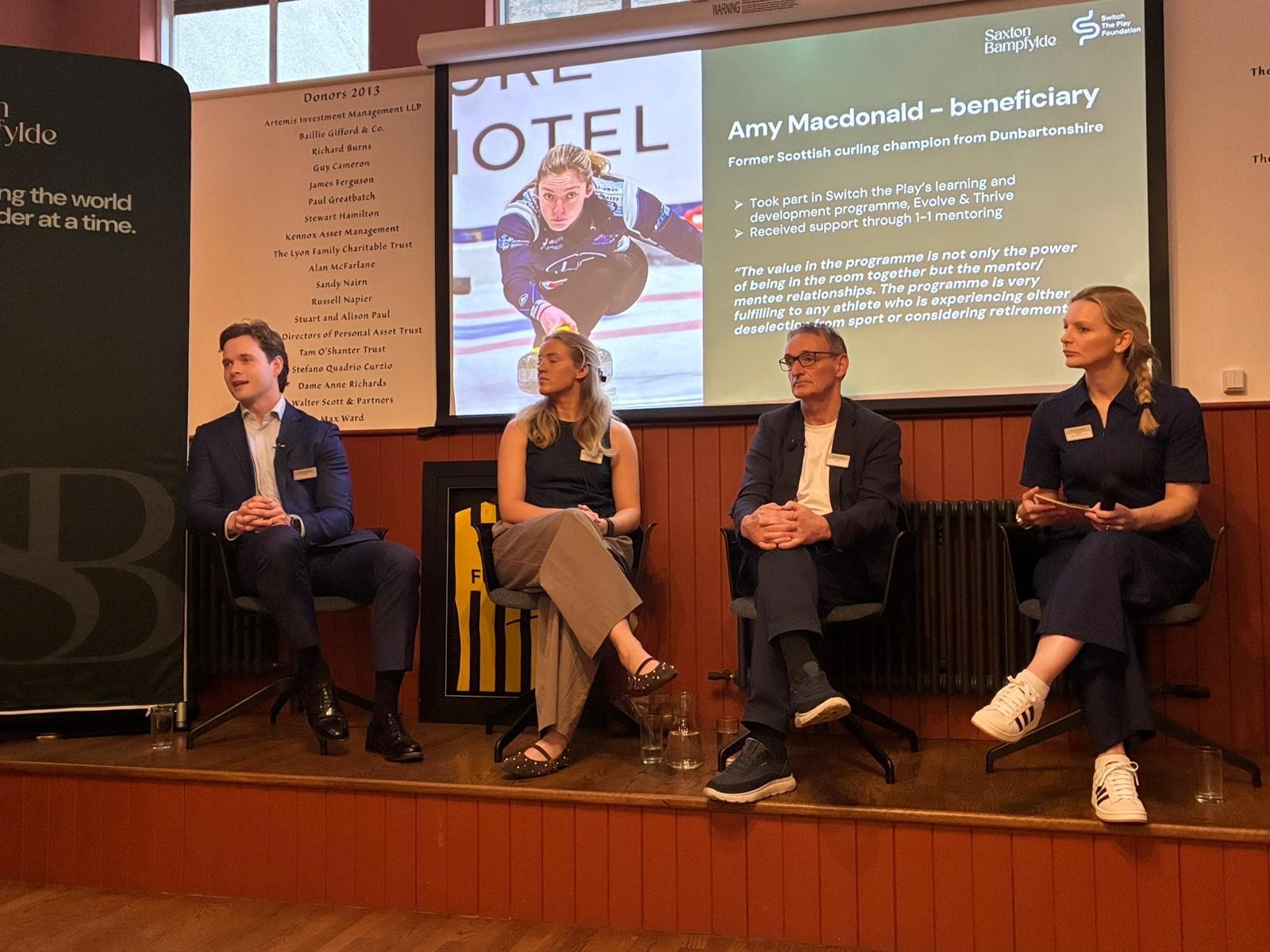
Articles
“Difference isn’t a risk. It’s the point.”
View “Difference isn’t a risk. It’s the point.”
Insights
Breaking Barriers in Tax and Leadership
View Breaking Barriers in Tax and Leadership
Articles
High Stakes, High Performance: What Elite Sport Teaches Leaders
View High Stakes, High Performance: What Elite Sport Teaches Leaders
Articles
“You can’t separate the family from the business so consider it a strength.”
View “You can’t separate the family from the business so consider it a strength.”
Articles
“Automation as our partner, not the sole author of decisions.”
View “Automation as our partner, not the sole author of decisions.”
Articles
“Finally, I’ve Made an Impression”
View “Finally, I’ve Made an Impression”Articles
The Journey of a Search CEO Podcast: Kate Ludlow
View The Journey of a Search CEO Podcast: Kate Ludlow
Articles
We’re in this together: Celebrating Employee Ownership Day 2025
View We’re in this together: Celebrating Employee Ownership Day 2025