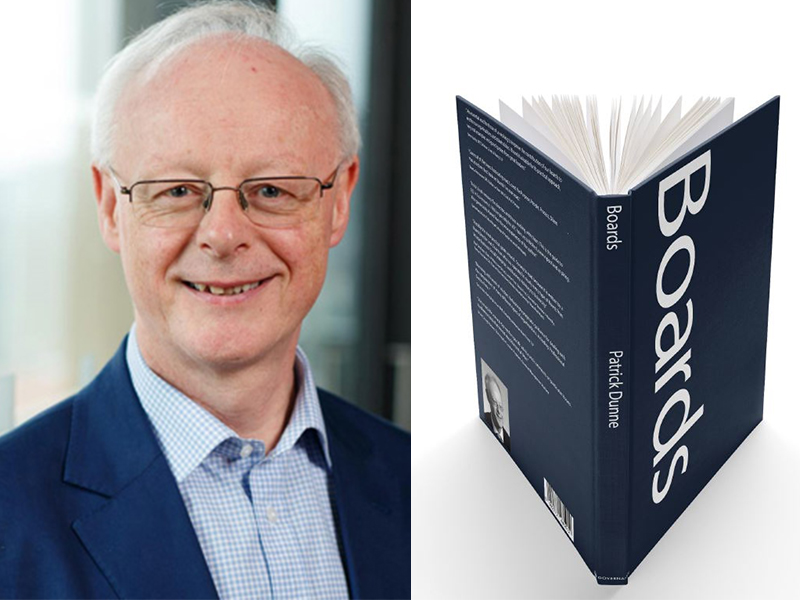
We were delighted to host a couple of webinars through May with Patrick Dunne who recently published ‘Boards: A Practical Perspective’ which has been shortlisted for the Business Book Awards 2020. This provided a forum for Chairs, across the commercial, public, not-for-profit and education sectors, to discuss the impact of the crisis on governance and to share their knowledge and experience.
Change is inevitable
There was widespread agreement that the crisis has already and will continue to change the way boards operate. The ease with which boards have shifted to entirely virtual meetings has thrown into question whether physical meetings, with their accompanying travel times and typical tardiness, will return as the status quo. Given the age profile of many boards it might appear virtual board meetings and even strategy days are here to stay. Whilst meetings are being called more often, they are shorter and more focused to combat ‘zoom fatigue’. Looking to the future it seems obvious the composition of boards will change as the skills required for board members for the next phase change, and any ‘passengers’ are weeded out by good Chairs. Some felt that a premium will be placed on financial literacy and approaches to risk management may well shift, with a greater focus on planning for consequences as opposed to specific events.
Stages of the crisis
Boards have been dealing with the crisis in three stages; crisis control as the initial lockdown hit and organisations had to move quickly to work remotely or shift their operations; steady state when the board had to lead the organisations as painful decisions were made and the leadership tried to create a sense of normalcy; and boards are now looking to recovery.
Organisations have found their ability to move at great scale and pace has happened more quickly than they ever would have imagined, suggesting further opportunities to develop and adapt business models across a variety of functions. Chairs shared their instincts to act fast and ‘fail fast’ rather than missing the key moment to act. The crisis has acted as what one person called ‘the great accelerator’ as organisations have quickly pivoted the nature of their offering or operations. All organisations are assessing what has worked better than had been expected and what they can retain going forward. Good data around the board table is vital in helping to inform decisions around homeworking and productivity. Others felt the crisis had brought long standing issues that had been bubbling, such as work life balance, to the surface.
In the initial phase some boards had established specific sub-committees to carry out the nucleus of Covid-19 related decisions. Effective in making immediate changes in some cases, using the whole board as the highest level Covid-19 committee was advocated by the majority, not least for maintaining a feeling transparency and shared conviction.
From the Chair’s point of view the challenge has been simultaneously focussing on leading the board through the current crisis whilst thinking about the longer-term strategy of their organisation in a much-changed world.
Working alongside the Executive
Unsurprisingly the level of communication between the Chair and Chief Executive has increased throughout the crisis, often to weekly calls, and for some this had not been welcomed by the executive. It was reflected by several Chairs that the pace, agility and authenticity of communications within an organisation has become more crucial than ever at present. The increase in contact focussed sometimes on the different task of helping the executive through the emotional challenge. One chair observed that a CEO who had previously only known a rapidly growing business had found the proposition of redundancies in the senior management team particularly tough. Most Chairs were very complimentary about the way that their senior management teams had been responding, in some cases with the support of an executive coach. Whilst a handful of Chairs felt the crisis had brought some ‘rotten apples’ to their attention and difficult conversations needed to be had.
The main challenge now facing many organisations is how they will come out of lockdown in an era of social distancing and the question for boards as they move into the next phase is whether the executive team that took the organisation into the crisis will have the right skills to lead the organisation out of the crisis and into the future.
Morality and Ethics
Another theme facing the board and executive was the morality and ethics of using the furlough job retention scheme, a topic which has exorcised organisations which operate at the intersection of public service and the private sector. A charity CEO was hesitant to take up the scheme on ethical grounds, feeling that they had never taken government money or intervention in the past. The board, in support of the scheme, overruled on that occasion but it brings into focus the need for implicit trust between the executive and non-executive.
Looking abroad
Finally, the cultural context in which boards and organisations across the world operate has come into much sharper focus. The furlough scheme in the UK has been comparatively generous compared to those put in place in other countries where workers are not guaranteed pay or longer-term security. Some countries with more authoritarian governments have responded quickly and firmly to the crisis and are now easing lockdown. As these organisations come back to work it may provide a blueprint for other countries that are not yet at that stage, but it is difficult to draw definitive parallels.
To summarise:
Boards are making conscious decisions as to where they want to land on the dynamic spectrum connecting the world as it was the day before we went into crisis and a new post-crisis world. This will likely be a place that encompasses what leaders want whilst also being an environment that both employees and customers feel comfortable with and accept. The implicit trust between the executive and non-executive has never been so important in responding to this change and establishing resilience.
Sector team
Sophie Tredinnick Head of Government Practice
View Sophie Tredinnick
Siân Brown Consultant
View Siân Brown
Nick Ricketts Consultant
View Nick Ricketts
Corrie Cowlard Consultant
View Corrie Cowlard
Brett Anderson Consultant
View Brett Anderson
Jonathan Morgan Deputy Chair & Head of Regulation Practice
View Jonathan Morgan
Alex Richmond Head of Health Practice
View Alex Richmond
Augusta Bunting Head of Board Practice
View Augusta Bunting
Related Insights
Insights
Board Talk: The Next Twenty-Four Months: Boards and the Speed of AI
View Board Talk: The Next Twenty-Four Months: Boards and the Speed of AI
Insights
University governance is about stewardship, strategy and long-term value
View University governance is about stewardship, strategy and long-term value
Insights
Lessons on Leadership from the World of Sport
View Lessons on Leadership from the World of Sport
Articles
Designing Boards to Think Strategically
View Designing Boards to Think Strategically
Articles
Board Talk
View Board Talk
Articles
“Difference isn’t a risk. It’s the point.”
View “Difference isn’t a risk. It’s the point.”
Insights
Breaking Barriers in Tax and Leadership
View Breaking Barriers in Tax and Leadership
Articles
High Stakes, High Performance: What Elite Sport Teaches Leaders
View High Stakes, High Performance: What Elite Sport Teaches Leaders
Articles
“You can’t separate the family from the business so consider it a strength.”
View “You can’t separate the family from the business so consider it a strength.”
Articles
“Automation as our partner, not the sole author of decisions.”
View “Automation as our partner, not the sole author of decisions.”