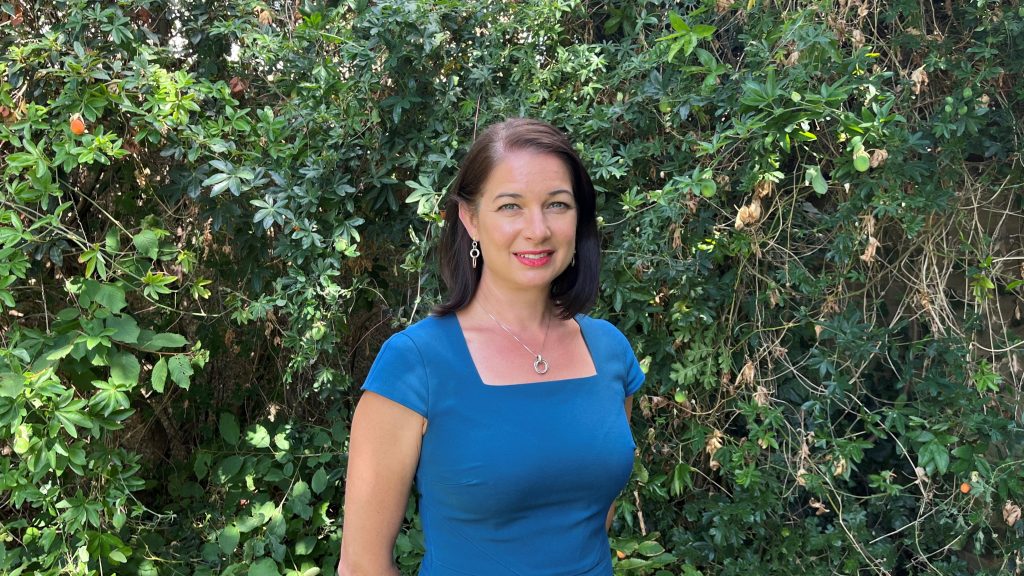
Laura Churchill is Chief Strategy Officer at Central London Community Healthcare NHS Trust (CLCH), one of the largest specialist community health providers in the UK. With a career spanning consultancy and NHS leadership, Laura brings deep experience in system transformation and partnership working. In this interview with our Health Practice, Laura reflects on the evolving role of community services, the leadership needed to navigate complexity, and how the NHS can harness the full potential of neighbourhood care.
You’ve described community services as the “quiet engine of the NHS”, fundamentally powerful but often under-valued. How do you advocate for the strategic importance of community health within a system that still tends to prioritise acute care?
It is a challenge, particularly when community services are often framed as the solution to hospital discharge pressures, rather than being valued as a sector in their own right. But increasingly, people are recognising that the most appropriate, safe, and person-centred care often happens in the community, not in hospital.
“No single organisation can deliver neighbourhood health in isolation.”
At CLCH, we advocate for the unique strengths of community health every day. But crucially, we do this in partnership. The neighbourhood health service isn’t just about the services delivered by a community trust—it includes primary care, mental health providers, local authorities, and the voluntary and community sector. No single organisation can deliver neighbourhood health in isolation.
We are now seeing a policy shift towards neighbourhoods which, in some areas, is leading to confusion about which organisation is best placed to lead, but it’s work that community providers have been doing for years. We’re used to walking into patients’ homes, tailoring care to their individual needs, and working hand-in-hand with others. What we bring is both scale—enabling system-wide coordination—and precision, through deeply embedded, localised care.
We’re using our new strategy, Healthy Neighbourhoods, Thriving Communities, to shine a light on what community providers can offer. It’s a case for trusting those already rooted in neighbourhoods to take a leading role in shaping care where people live.
The 10-Year Plan gives greater prominence to neighbourhood and integrated care models. What excites you most about the potential for change and innovation, and what do you believe leaders must do to deliver this?
The renewed focus on neighbourhoods is genuinely exciting. Our strategy, although formally launched in July, has been years in the making—built around the vision of a neighbourhood health service that works with and for its communities. This isn’t just about delivering excellent services; it’s about integrating those services in a way that responds to local needs.
For example, our oral health promotion team in Hammersmith and Fulham and Kensington, Chelsea and Westminster is training school and nursery staff to deliver daily supervised toothbrushing sessions to 3-5-year-olds. The sessions help children to build good habits for life and reduce their chance of tooth decay and extraction.
“To deliver this kind of transformation, leaders need to stop thinking solely in terms of organisational performance or control and start thinking in terms of Place.”
In Barnet, we have worked with patients, the voluntary sector and other partners to develop a self-referral pathway for patients with chronic respiratory problems. This was in response to feedback from patients in deprived areas, who said that needing a GP referral was a barrier to accessing services. After six months, the pulmonary rehabilitation service saw an 80% increase in eligible patients from vulnerable groups with chronic respiratory conditions being referred to the service.
In Hertfordshire, we’re working with a range of NHS partners to help stroke survivors recover and return to work safely. Combining occupational therapy, speech therapy, and psychological support, the pioneering service helps patients manage the challenges that can impact their working lives. Crucially, they work closely with employers to facilitate workplace adjustments and promote understanding of stroke recovery, so more stroke survivors can return to work.
To deliver this kind of transformation, leaders need to stop thinking solely in terms of organisational performance or control and start thinking in terms of Place. It means asking: what does this neighbourhood need? And how do we collectively make that happen and hold one another to account, rather than just how does my organisation hit its targets?
That shift also requires a different kind of facilitative leadership—one that tolerates warranted variation, shares power and resources generously, and sees success as collective, not individual. It’s about building a leadership model that can thrive in partnership.
The reality is that care in the community is resource intensive; you need high-quality staff who are comfortable holding responsibility and often working completely independently, and leaders who understand that neighbourhood-based care requires variation which may not be how we can maximise activity or reduce cost as much as possible, but instead focus on how we can be most productive; ultimately delivering better outcomes in the longer term. They must be brave in deciding how to run and organise systems which focus on what matters: better health and wellbeing.
CLCH teams work in highly complex environments—supporting people with interlinked health, housing and social needs. What kind of leadership does this require, and how do you build the capability, confidence and resilience needed to thrive in these settings?
Neighbourhood care means navigating complexity. Every day, our staff encounter people who are living with multiple long-term conditions, mental health needs, housing challenges, and social isolation. We know our nurses are sometimes popping to the shops to top up an empty fridge or flagging housing concerns to local authorities. It’s care that goes far beyond clinical intervention but it’s not yet systematised, and it can depend on whether someone has the capacity or time that day.
To make this work, we need leadership at every level. That might mean a district nurse, social worker, or community support worker stepping into the role of coordinator for a person’s care. In a recent simulation we took part in, facilitated by PPL and alongside colleagues from across London, we trialled different models of neighbourhood health. Even by the third cycle of refining this model, dozens of professionals were still arriving at the same patient’s home, albeit better informed and connected. What was missing was clear leadership around the individual: someone empowered to organise and sequence care in a way that worked for the person.
This means organisations like ours must delegate authority and empower frontline staff to lead in their context. It also means training people in how to work in partnership, negotiate across boundaries, and interpret their roles in new ways. We can’t expect traditional, linear hierarchies to work in these settings.
And we must move towards more senior, comprehensive roles that can manage complexity. Too often we’ve tried to make the system ‘cheaper’ by carving out specific tasks to junior staff. But when those roles are not equipped to handle complexity, it fragments care. In the long run, investing in roles that can take a whole-person view is not just better for patients—it’s more efficient.
“Leaders know that community health will (and already does) play a vital role in absorbing system pressures, but that doesn’t mean that they are an infrastructure to support acute services.”
The 10-Year Plan signals a step change in ambitions for community care, but scaling without the right foundations risks a loss of focus or dilution of impact. What recommendations would you give to leaders to ensure community health is not simply absorbing system pressures, but shaping a more sustainable future for the NHS?
This is a huge question, but first and foremost, we need better data. Community services do not have the same level of data quality, consistency, and visibility as acute trusts. There’s no standardisation—every trust measures things differently, and many still underreport the work they do. We’re now working with national and regional teams to explore how our work could be scaled nationally. Because without data, we cannot demonstrate our value—and that means we cannot influence how resources are allocated or how policy is shaped.
Leaders know that community health will (and already does) play a vital role in absorbing system pressures, but that doesn’t mean that they are an infrastructure to support acute services. We need to step confidently into our role as neighbourhood leaders. That means delivering excellent care, yes, and also taking responsibility for forging partnerships, shaping care models, and advocating for what our communities need.
Ultimately, this is about focusing on outcomes. Moving away from narrow KPIs and towards population health metrics that matter. The tension, of course, is that outcomes often depend on multiple partners, but partnerships aren’t statutory bodies, so we must find new ways to hold collective efforts to account, even if the structures don’t yet exist.
“In the NHS, there is huge value in working across sectors. We need leaders who understand the system from multiple angles—whether that’s the NHS, local government, the voluntary sector, or beyond.”
Lastly, what advice from your own career would you give to aspiring leaders in healthcare?
I started my career in consulting, and I think it’s a brilliant foundation. It teaches you to step into unfamiliar environments, get to grips with complexity quickly, and deliver results. The NHS needs that kind of mindset—leaders who are hands-on, delivery-focused, and comfortable getting stuck in.
Healthcare is an extraordinary sector. Yes, many people are feeling demoralised and tired of hearing that the system is broken, but despite that, incredible things happen every day. If I were speaking to someone just starting out, I’d say: stick with it. The system will get better. In fact, I think we’re on the cusp of real change—born out of necessity, which is not easy, but fuelled by genuine will for transformation because things must change quickly.
My advice is to be intentional about your career. Have a sense of where you want to be in five years. Think about the kinds of roles and experiences that will help you grow—not just in seniority, but in perspective. In the NHS, there is huge value in working across sectors. We need leaders who understand the system from multiple angles—whether that’s the NHS, local government, the voluntary sector, or beyond. That cross-sector empathy is what will make our integrated partnerships work. Especially in strategy and transformation roles having a breadth of experience is not a luxury, it’s a real advantage.
To read more about CLCH’s new strategy: Healthy Neighbourhoods, Thriving Communities — read the full strategy here and watch the short animation here.