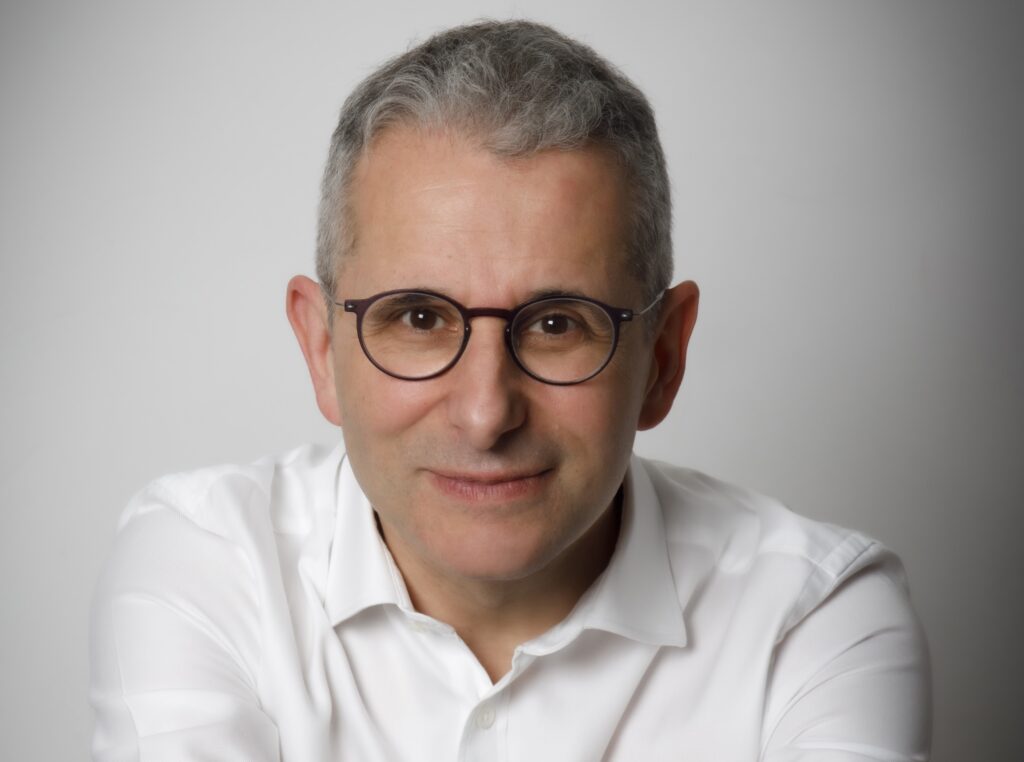
Alastair Levy is founder of Alastair Levy Advisory. He works with with leaders and organisations across sectors on how they address the opportunities and risks created by an era of increasing volatility and achieve their aspirations to make a positive difference. He was for a decade Global Director of Risk at McKinsey & Company and has led research on how professional-services firms across accountancy, consulting, executive search, law and PR combine impact, innovation and risk.
Interview by Kate Ludlow, Managing Partner and Consultant at Saxton Bampfylde
You have a career spanning more than 35 years advising the private, public and social sectors on how they manage risk including a decade as Global Director of Risk at McKinsey and now as founder of your own consultancy, Alastair Levy Advisory. Over this period has the importance of risk moved up the agenda sufficiently?
For many organisations, risk was historically a relatively technical, back-office corporate activity relating to credit, operational or compliance. As an example, discussions of geopolitical risk were largely focused on specific, discrete issues such as expansion to a new market, long-term investments in areas such as energy, or a narrowly defined set of ‘sensitive sectors’ such as aerospace and defence.
This has changed considerably over the last few years, with more and more leaders and boards making geopolitical risk — and risk more broadly — a core element of their culture, strategy and operations. Indeed, for many organisations, their approach to risk is becoming an increasingly important element of their competitive differentiation.
Has it moved up sufficiently? Leaders must recognise that, in the same way as risks are continually evolving, the way that firms manage them needs to be equally adaptive. Accordingly, discussions about risk must feel dynamic, engaging and relevant, not a bureaucratic or repetitive process.
Over the last 15 years we have seen the global financial crisis, the UK bank collapse, Brexit, the pandemic and now the Middle East conflict. ‘Permacrisis’ was a recent Oxford Dictionary word of the year. Whether there are more crises, or we are just more aware of them, they would seem to have an impact on risk. What can we do to ensure we always monitor and prepare for them?
First, take seriously the risks you are aware of, such as geopolitics, pandemics and cyber. Because things are changing so often and so quickly in these and other areas of risk, create space and time for your board and executive team to be informed about your changing operating environment.
Second, use creative ways to look round corners for new and emerging issues. That might involve seeking input from a diverse range of people inside and outside your organisation and asking probing questions that elicit non-standard responses. It can also include activities such as scenario planning, simulation exercises and resilience planning.
Third, and most importantly, create the mindset and capabilities you need for ‘adaptive resilience’, so that you are better equipped to deal with the unexpected. Generating an environment where your board members, executive team and risk colleagues know each other well will help ensure that they have collectively developed the muscles needed to respond rapidly when issues occur, including those you haven’t forecasted.
In your paper, “The Risk Imperative for professional service firms” you talk about the importance of taking bold decisions, including where the right answer is either to say “no” to taking on additional risk or to lean forward into a new area of work. In an ever-competitive world, how do you ensure that you get the balance between the existential risk of not trying new things and betting on the wrong horse?
There is indeed a balance to be struck in assessing an initial instinct to jump in or stand back, which calls for nuanced thinking. You must ensure — especially when you go into new, innovative areas of work — that you think through the second- and third-order consequences. The right guardrails then have to be put in place, whether relating to your governance, policies or risk appetite, or your capabilities, processes and systems. Then, in the more medium and longer term, it’s essential to keep things under review, with a few practices which can help:
- Innovate in smaller steps — which, for tech-enabled change, also reduces the risks of failed major IT projects.
- Ensure clear leadership for new areas of work, appointing leaders with a combined entrepreneurial and risk mindset.
- Put in place the right level of expert insight and oversight.
- Consider the option to house new ventures in dedicated parts of the firm.
- Periodically review whether the time is right to go into a new area of work, extend your efforts, adjust your course, or pull back.
Someone once said to me that if you have a board of three members who always agree, two of them are redundant. What are the dangers of groupthink and how do you ensure that you have the appropriate diversity of thought to provide challenge?
Partnerships benefit from having colleagues with shared values, beliefs and aspirations, linked to each other through trust-based relationships. So, the question is how to build from that starting point.
When looking specifically at boards and leadership teams, there are at least three ways to ensure diversity of perspective: first is who you select or elect to join a board or leadership team. Second, irrespective of who is on a board or leadership team, is bringing in diverse perspectives — whether from adjunct members, or voices, insight or data from across or beyond the organisation. Third is the conduct of meetings — with the role of the chair essential for ensuring that diverse and discordant views are solicited, heard and debated.
You talk about ‘The Risk Imperative’ for professional service firms. Why is that becoming more important and what should our strategies be for dealing with it?
The drivers for professional services firms to take a more systematic approach to risk are part internal, reflecting their increasing scale and complexity; and part external, echoing the increasing external volatility and scrutiny facing them and their clients alike.
There are, of course, multiple strategies to enable firms to address this, but as a starting point: Put in place a systematic approach to risk — including governance, processes, capabilities, and systems — which builds on best practice across sectors and also reflects on the individual values and context of the firm. Create a vibrant, dynamic risk culture, in which time is taken out of busy days to discuss risk at all levels of the firm, from the board to the kick-off discussion of a team serving on a new client or project. Importantly, change your mindset and think of risk as an entrepreneurial as much as a safeguarding activity — with a dual mission for your risk committees and risk professionals of enabling and protecting the firm.
What would you identify as being the top 3 priorities, from a risk perspective, for law firm leaders?
Put simply, your top strategic risks are those which threaten the future of your firm as you know it. With this in mind, I could see versions of the following themes as relevant for many firms:
The first is Geopolitics — in terms of which clients you serve, where you have offices, the advice you give, and the diverse perspectives of your colleagues. This is becoming increasingly important as we live in a fragmented, fractured, ever more polarised world.
The second is Technology. This includes cyber risk and the impact it can have on your operations and the trust clients invest in your holding their confidential data. Then there are the multi-faceted opportunities and risks relating to new service lines and related tech implementation — for which it is important to recognise that we are still at an early stage of understanding what the implications of AI will be for law firms’ clients and for firms’ service lines, people and economics.
The final theme is People. This includes maintaining the fabric of growing partnerships, care for the mental wellbeing of your colleagues, and ensuring that the diversity of your people matches that of your clients and the societies in which you operate.
In particular, what does best practice look like for a law firm from your perspective?
I’d suggest three components. First of all, build on what you already do well — whether systematic management of risk for which you are regulated (such as AML and conflict), the judgment of your colleagues (much of whose professional work and expertise relates to advising on different forms of risk) and the culture of a trust-based, values-based partnership.
Secondly, periodically step back and identify where you can evolve your approach to risk — for example in creating time to look systematically across the full range of risks you face and the actions you need to take to address them. These discussions will be more productive if informed by a diverse range of internal and where helpful external perspectives.
And third, treat managing your firm’s risks as a source of competitive distinctiveness — given the assurance it provides to your clients on how you maintain their confidential data, ensure the quality of your advice, and role-model the advice you give to your clients.
Biography
Alastair’s 35-year career has focused on roles at the centre of complex organisations in the private, public and social sectors. Before his current work as an advisor, counsellor and coach, he worked at McKinsey & Company for 22 years, including a decade as Global Director of Risk. This followed earlier careers in the UK government and as an orchestral and operatic conductor.
As McKinsey’s first-ever Global Director of Risk, he counselled senior leaders and partners of the firm globally on how to navigate complex issues in all sectors and over 120 countries; was as a member of the firm’s senior decision-making committee for its higher-risk client work; advised the firm’s board on the firm’s overall risk priorities, policies, capabilities and culture; and created and led the firm’s global risk function.
Alastair studied philosophy and economics at the University of Oxford, followed by postgraduate study in orchestral conducting at the Royal College of Music. He qualified as a business coach with High Distinction through the internationally renowned Meyler Campbell Mastered programme