You are the Independent Chair of the Chartered Insurance Institute (CII), which has a governance model which is quite different from a lot of professional bodies. Tell us how that works and the benefits it brings for the membership?
The CII was first incorporated in 1912 by Royal Charter and has grown to 120,000 members across 140 countries. This makes it a complex organisation where governance changes require a lot of consultation and specific agreement. The most recent changes were agreed in 2019, identifying the need, amongst other things, to introduce the role of Independent Chair. I was the first person to take on this position in 2020.
Previously the President, who is also always a CII member, undertook the Chair role for a one-year term. With this separated focus the President can concentrate on reaching out and engaging with the members, undertaking a sort of ambassadorial role, which is really important and a real professional accolade to be selected as President and they need time to undertake that responsibility. An independent Chair brings longevity in the position to lead the Board and to allow a more developed relationship with the Chief Executive to refine the strategy.
We also made the board smaller moving away from a representative Council model to a mix of independents and members. These four CII members offer a deep understanding of the market and our membership. From those individuals we gain perspective on key areas: our international cohort; financial planning and wealth management; commercial sector; the London market. I believe that this mixed board approach offers the best of both worlds.
While at CII, as well as in other roles, you are no stranger to appointing and embedding new CEOs. What is the magic sauce for making sure that those people hit the ground running, combining making an impact with building positive relationships?
Obviously there needs to be a really good quality relationship between the Chair and the Chief Executive. This means an ability to provide mutual counsel and candid feedback, an ease to interact, not transact.
It doesn’t mean reporting continuously on each other actions but spending quality time together discussing the future. When appointing a new Chief Executive, it is vital to spend time over the process, getting to know each other and making sure they understand the organisation, its people, its potential and its challenges. That is part of the responsibility of the Chair, and you need to take time to share your views and how the dynamics of the board work. It is also important to understand how they will work with the board, understanding whether they have felt empowered or hindered by a board in the past, and how they can help them make decisions and provide support.
What are the major opportunities and challenges facing the CII over the next few years?
I think the most pressing issue we face is the way the tide is turning on externally imposed regulation in favour of the growth agenda. Regulation has long been seen as a proxy for public trust and confidence, but regulation is becoming devalued. In the UK there was a strong signal sent by the government about its growth focus. In January this year we saw the departure in of the Chair of the Competition and Markets Authority and we’re also seeing the FCA change its modus operandi, for example, changing CPD requirements.
That shift comes as both a challenge and an opportunity. The challenge lies in the fact that insurance and financial planning are absolutely powered by public trust and confidence. The need to build and maintain public trust in our profession and sector is the very purpose of the CII and we need to always be clear and proactive on that point. We are at the heart of professionalism, supporting our members to be excellent and show best practice. That has always been our mission and overseen, I suppose for many decades, by the seal of regulation.
But this also presents the backdrop to the opportunity – with the frontiers of formal regulation rolled back something needs to take its place. That is where the importance of professionalism comes to the fore, supported by professional bodies. I think we’re going to move away from an era in which responsibility for achieving good customer outcomes is delegated to the regulator or compliance departments. That responsibility for doing the right thing for the right reasons is going to be shared across whole organisations from the top down.
We’re never going to step back from that in terms of our requirements and membership designation. If you were to look at us crudely as an organisation it may be considered that we are largely there to train, award professional titles and provide CPD. That misses the point, and we need to do more to emphasise this. We are there to ensure public trust and confidence in the profession. That is our overriding purpose.
This requires continuous review and ensuring our members remain current in their qualifications, knowledge and expertise, but also importantly in their view and understanding of their markets in the wider international context, as well as emerging areas of importance in the insurance world such as AI and cybercrime.
“The harder this sector and profession works to empower consumers, the better we will be together.”
Many member organisations have decided to appoint independent board members, chairs or similar. As CII’s first independent Chair, how do you see that independence adding value to the organisation, and how do you ensure that members feel that it is still their professional body?
As an independent member, but especially as Chair, you must have an affinity with the profession, empathy with the professionals and a glint in your eye about what you would like to achieve. If you don’t have that, it’s probably not the right role for you.
Before I considered this Chair position, I had not thought deeply about the fact that very little happens in the world without insurance. As a public collective we don’t necessarily think about insurers or financial planners in the same breath as doctors or dentists, architects, accountants or actuaries. In my view we absolutely should. Those insurers have solemn responsibility to manage the pooled resource to be able to support those who suffer loss by paying the claim. There is a lot of evidence that shows statistically significantly better financial outcomes arise when qualified financial advice is provided. It ensures better business certainty and resilience, and helps individuals achieve security and financial goals.
It’s a privilege to Chair the CII and this is very much down to the consistency of the culture of integrity and trust from its professional members. Our governance has moved away from a fully representative membership council, but we are still very much united, with over 52 regional institutes in the UK alone.
That commitment to professionalism will be the ultimate protection of clients and the underpinning of the industry’s status. It’s going to require the leadership of big firms to redouble their efforts, not only to maintain their ongoing competence and protect their credentials in a way that is transparent to consumers, but they’re going to have to go beyond that to help them make good choices.
Consumers today face a much greater range of risks than in the past, but when they are empowered, they make the right choices and there are less problems with claims. In the end the harder this sector and profession works to empower consumers, the better we will be together.
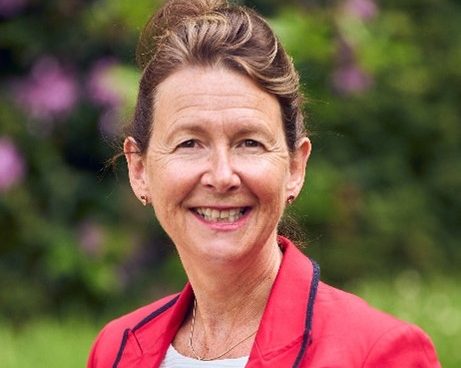
Dr Helen Phillips – Biography
Dr Helen Phillips became CII Board Chair in 2020, the first Independent Lay Chair following 2019 governance changes. She currently chairs NHS Professionals Ltd and serves as a Gambling Commission Commissioner and Senior Independent Director at the Environmental Services Association. Previous roles include chairing the Legal Services Board, Chesterfield Royal Hospital NHS Foundation Trust, and founding Non-executive Director of Social Work England. Her regulatory career includes founding CEO of Natural England and Director, Wales at the Environment Agency, plus board roles at Yorkshire Water and Loop Customer Management Ltd. She holds a BSc in Zoology and PhD in Environmental Science from University College Dublin, and is a Fellow of the Royal Society of Biology.