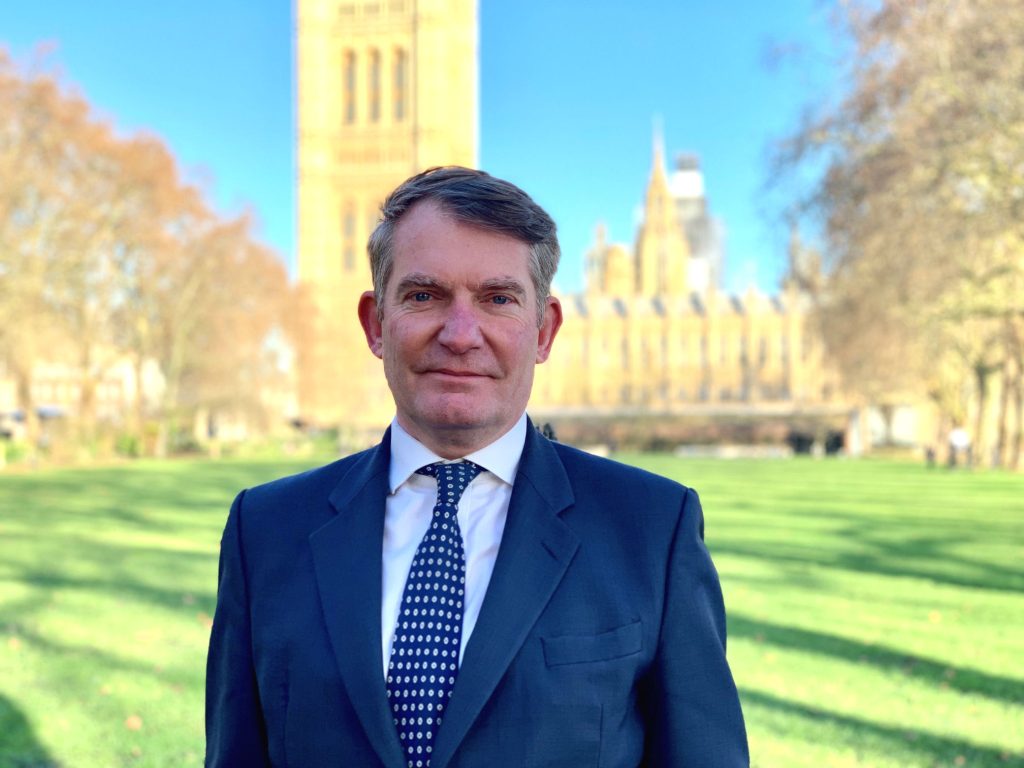
As founding Chair of the Institute of Regulation and Chief Executive of the Insolvency Practitioners Association, Marcial Boo has led four different regulators, including the MPs’ spending watchdog IPSA and the Equality and Human Rights Commission. In this interview, he discusses the unique challenges of regulatory leadership and the future of insolvency regulation.
You have recently joined the Insolvency Practitioners Association as Chief Executive, and previously you have held Chief Executive positions at the Equality and Human Rights Commission, and the Independent Parliamentary Standards Authority. Being Chief Executive is always a challenging job, but are there aspects of doing that in a public body, and particularly in a regulatory context, which are unique?
Being Chief Executive of a regulator is unique in two specific ways, I believe. First is the need to strike the balance between independence and accountability. Regulators, unlike civil servants, need to be independent in decision making on important issues which impact society and the economy. Your organisation must have the wherewithal, the intellectual capital and the resources, to be able to make these decisions. These are not decisions made by ministers, and it requires authority and credibility. So, independence is crucial. But as public bodies, regulators, unlike businesses, are also accountable to Parliament, and often to the Government and ministers too. The ability to find the right balance, where you’re making independent decisions but accountably, can be really tricky.
The second area where I see as distinct to lead a regulator stems from the first and is about the visibility of responsibility. As a Chief Executive of a regulator, your name is often public in a way that it isn’t if you are a senior civil servant or if you run a business. Sometimes the decisions you make are not popular, even when you think it the right thing to do. For example, when I was at the IPSA, the parliamentary watchdog, we raised MPs’ salaries. I can tell you that wasn’t popular but, after conducting research and consultation, we did what we thought was right.
“The ability to find the right balance, where you’re making independent decisions but accountably, can be really tricky.”
But this can create a lose-lose situation for regulators. If the Government likes your decision, they are happy to take credit, but if they don’t, they may just blame the regulator. It is like being an umpire or referee in a sporting match: the beneficiaries of a decision keep quiet, but those who lose out might make an almighty fuss.
This means that being a regulatory leader requires a degree of courage; you must explain your decisions publicly to parliament, industry and the media. It is therefore vital to have a team of knowledgeable, supportive colleagues to help you reach and retain the belief in your decisions.
This environment often means that the type of people who work in regulation, and not just at a senior level, are strongly motivated by values of fairness, consistency and rules-based approaches, in my experience. My regulatory colleagues really care, whatever the sector they work in, and they have to make hard calls – some more frequently than others. They may feel compelled to do something, however difficult, because they believe in fairness.
And this reflects one of the things that has kept me in regulation: the intellectual challenge. Because there often isn’t an easy answer. There’s not a single fix. We’re always trying to balance keeping benefits and protections for consumers, with keeping costs down, with enabling markets to flourish, with not imposing too many burdens. We need as regulatory leaders to ensure that the right thing is being done, fairly, and that people are getting the best out of a consistent and efficient regulatory regime.
“In the public roles of Chief Executive and Chair, it is important to have the professional and personal support that you need. I encourage every senior leader to put those in place.”
Regulators often find themselves in the public spotlight, and as a CEO and Chair you are a natural focal point. How do you maintain your resilience and sense of perspective in those situations?
In the public roles of Chief Executive and Chair, it is important to have the professional and personal support that you need. I encourage every senior leader to put those in place. We each need to be mindful that we are all just physical beings. Often senior people can be ambitious and driven, with a strong sense of purpose, but we need to be careful that we don’t burn out. We each have to look after ourselves and keep connected to family and friends, but also take physical exercise, stay hydrated and sleep, etc. – all crucial to maintaining a balanced life.
Often these senior roles are lonely, because you can’t talk to your staff about some personal challenges. As a Chief Executive, a good relationship with your Chair or someone on the board can alleviate that to a degree. For the Chair, that may be even harder to achieve. I think this requires us to have a certain emotional intelligence, so we can remind ourselves that we are human and have limitations.
Your exposure in regulatory leadership roles can be very challenging. I had social media abuse at IPSA and two death threats when I was Chief Executive of EHRC and regulating issues of sex, gender and trans rights. It is awful that people feel they can do this to a regulator, but that is the world we live in. People should be able to offer views about important social issues: that’s the way we work out what to do in a changing society. But we shouldn’t defame or threaten people in the process.
The regulation of insolvency practitioners is currently carried out by a number of bodies, and there has been discussion of regulatory reform. What thoughts do you bring from your past experiences of regulation in other sectors regarding the challenges and opportunities of such change?
There are currently three bodies that regulate the UK insolvency profession. The Government has said it wants to legislate for change this year to bring them closer together, as most sectors have just one regulator. That strikes me as the right thing to do.
I was appointed to help the IPA work through this process, to help bring greater consistency and improve the regulatory environment in this sector and bring benefit to the public who need the services of insolvency professionals, whether as creditors or debtors. Of the three regulators, the IPA is the only one focused solely on insolvency and that operates across the UK, drawing on its longstanding roots as a successful membership organisation running training, events and exams for the profession.
I have not worked in financial services regulation before, but I worked eight years in public audit, and I led regulators for 10 years in other sectors. I am also the Chair of the Institute of Regulation and in contact with many people from different regulatory organisations. I will draw on all that background to support me in this role.
At the IPA, we want to bring benefit to the insolvency profession and those it serves, as well as cut costs where necessary and keep improving standards. But any kind of change brings challenges as well as opportunities. I’m keen to work with the other regulators and with the government to manage this change, and we need to be careful about how we do that.
Aside from regulation, what are the main challenges and opportunities for the insolvency profession over the next few years?
Although I’m new to insolvency, there are two clear parts to it from my perspective: corporate insolvency and individual insolvency. Both respond to economic cycles, so the insolvency industry needs always to think about what is coming up economically, and where risks of insolvency might come from.
On the corporate side, we still have economic impacts from Brexit. The pandemic also had a significant effect as businesses dealt with exceptional circumstances and took on financial and operational risk. Even among businesses that thrived during Covid, some have collapsed afterwards when demand fell away. For example, bicycle manufacturers, which benefited massively during Covid, now have lots of surplus stock, and some companies have folded.
The individual insolvency side is obviously a difficult part of the business, because it is about dealing directly with people, rather than a company. It could involve individuals who’ve overspent or faced circumstances beyond their control, such as bad health, divorce or redundancy, and suddenly find themselves in deep financial trouble. They need to find a way out that might involve one kind of insolvency solution or another. These ways in which people can be helped need to be better explained and more consistently regulated, in my view. This is one of the areas where I hope to work with the Financial Conduct Authority, the Insolvency Service and others to improve the sector over the coming years.
You are the Chair of the Institute of Regulation, which you helped establish. Please tell us a little about the Institute and its future plans.
We established the Institute of Regulation four years ago. It began with a group of us who work in regulation in different sectors and knew each other informally. We talked about regulation and wondered why there wasn’t a professional body for regulators. Those we spoke to thought it a good idea, so six of us decided to set one up.
Now, the Institute of Regulation is having regular conversations not only with regulators and those who work in them, but with government officials and academics too. For example, we are talking to those setting up a football regulator, a new cricket regulator, the creative industry standards authority, and to those working to improve building safety regulation post-Grenfell. We are helping civil servants to tap into regulatory expertise from beyond their own departments, and the Institute is being consulted on regulatory policy developments by Parliament and civil servants.
“It may seem geeky to be so keen on regulation, but I think it’s an important niche, and the Institute is doing well and, I hope, helping to improve UK regulation.”
The Institute is growing quickly as an organisation and now has over 50 regulators as members, including major organisations such the Information Commissioner’s Office, Ofgem, the Pensions Regulator, Ofsted, Care Quality Commission and Civil Aviation Authority. There are also individual members from the UK and internationally, and strong links to renowned academics in the field of regulation.
The Institute talks often to counterparts internationally, particularly in Australia, New Zealand, United States, and the Netherlands, all of whom are very experienced in regulation. I would say that the UK is also in the vanguard of good regulatory practice. And, while the Institute is mainly for UK regulators, we have common challenges with those in other jurisdictions. It’s been great to collaborate and share experiences. Especially when regulating in areas that cross international borders.
The Institute has set up training courses on regulation, ranging from a two-hour introduction for new starters, through to a masterclass in regulation for those at board level run by a professor of regulation from the Netherlands. There is a quarterly online forum and a monthly regulation podcast which interviews people about current or important regulatory issues.
It may seem geeky to be so keen on regulation, but I think it’s an important niche, and the Institute is doing well and, I hope, helping to improve UK regulation. And I’ve been privileged to meet great people working in regulation along the way, who are each committed to making our society fairer and our economy stronger.
Marcial Boo – Biography
Marcial is the founding Chair of the Institute of Regulation, the sector’s professional body since 2021. He is also Chief Executive of the UK’s insolvency regulator. He was previously CEO of three other regulators: the MPs’ spending watchdog IPSA which he led for six years after the expenses scandal; Britain’s equality regulator, the Equality and Human Rights Commission; and the public health regulator UKPHR which he led through Covid. He was a director at the National Audit Office and Audit Commission, and a former senior civil servant at the Home Office and Department of Education. For two years, he advised the Prime Minister’s Delivery Unit in Downing St. He has published work on public service integrity (‘The Integrity Mismatch’), on the regulation of democracy (‘The Rules of Democracy’), and on public sector management (‘The Public Sector Fox’).