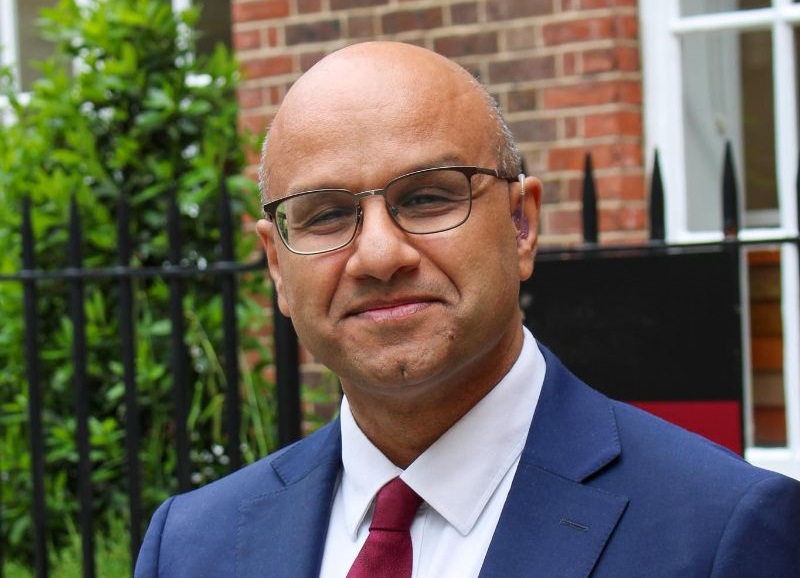
From Analogue to Digital: Rethinking Patient-Centred Healthcare: Dr Mohammad Al-Ubaydli


An interview with Dr Mohammad Al-Ubaydli, Founder and CEO of Patients Know Best 

As co-founder and CEO of Patients Know Best (PKB), Dr Mohammad Al-Ubaydli has long championed the role of patients as active participants in their care. Trained as a physician at the University of Cambridge, with research experience at the US National Institutes of Health and consultancy work with The Advisory Board Company, Dr Al-Ubaydli brings a distinctive perspective to the intersection of medicine, data and digital transformation. In this conversation, he reflects on the NHS’s journey from analogue to digital, the lessons behind PKB’s integration into the NHS App, and what the next decade of healthcare might look like.


The government has identified ‘from analogue to digital’ as one of the major shifts they want to see as part of NHS reform. How do you see the increased use of technology supporting the NHS’s relationship with patients?

It’s essential—not just as an opportunity, but as a necessity. The sheer number of people relying on the NHS simply cannot be supported by the current workforce without the help of digital tools. Fortunately, UK patients are digitally ready. As an example, the UK has the second-highest rate of online retail usage globally, after China, and one of the most densely populated catchments—50 million people within 200 kilometres of Northampton. It’s fertile ground for digital transformation.

Moreover, we’re now seeing apps that can detect early signs of conditions such as Parkinson’s through voice patterns or gait analysis—well before traditional clinical diagnosis. This is not just about efficiency; it’s about earlier, better and more scalable care.

But while the public is ready, the challenge lies with professional readiness. There are many digital innovations that are simply not possible in an analogue environment.


Patients Know Best became the first personal health record to be fully integrated into the NHS App. What were the key steps that contributed to this successful collaboration?

The most important factor was the support from our NHS hospital users. They went directly to central government to advocate for their patients. That grassroots demand was critical.

There was also a lot of technical navigation involved. For example, PKB used a higher level of encryption than many systems at that time, so to integrate with the NHS App, the government had to invest in matching that level of security. This change was only possible thanks to champions at NHS provider level who believed that investment in this change would make a tangible difference for patients. They did so using open standards so others could benefit too, which was a significant enabler.

But beyond the technicalities, it was about urgency and partnership. Frontline providers weren’t asking for a ten-year roadmap—they needed this now. The success wasn’t driven by PKB alone; it was a collective push from clinicians who saw the benefit for their patients. Internally, my colleagues often led the charge—sometimes overriding my own scepticism. That taught me a great deal about listening and trusting the team to pursue the ideas that matter.


“When the NHS App team procures on behalf of UK citizens, they do so with significant scale and responsibility. To be part of that, innovators must demonstrate both quality and patience. The NHS’s name is at stake, and the bar for integration is rightly high.”


In your article on the NHS App’s success, you mention the importance of governance and integration of private sector innovations. How has this approach influenced Patients Know Best’s strategy in partnering with the NHS, and what lessons can be applied to future collaborations?

We’ve always taken a quiet, strategic approach to working with government. When the NHS App team procures on behalf of UK citizens, they do so with significant scale and responsibility. To be part of that, innovators must demonstrate both quality and patience. The NHS’s name is at stake, and the bar for integration is rightly high.

Operating in the NHS has trained us to meet a high standard—delivering at scale, with low pricing and high service levels. That’s in stark contrast to some international companies, where pricing is often high and service inconsistent. Having proven ourselves in the UK, we’re now taking those capabilities to other countries that are more accustomed to the US model. The NHS has been our proving ground.

It reminds me of something Ridley Scott once said about starting his career in British advertising, competing with the BBC. Because he had to compete at such a high level from the outset, it shaped the quality of everything he did afterwards. That’s how we see our experience with the NHS—intense, demanding, and transformative.


What advice would you offer to other leaders hoping to build successful digital health partnerships with the NHS?

Above all: patience. You must plan for a long business cycle and manage your cash flow accordingly. Most investors expect rapid returns, but that model doesn’t work in healthcare—and it certainly doesn’t work in the NHS. At some point, you’ll reach a tipping point where usage spikes and data scales up, but it takes time to get there.

In our case, many early investors passed on PKB because of the long-term horizon. But that same frugality helped us survive long enough to find the right partners—people who understood our model and shared our vision. In the US, there’s been significant investment in digital health, but recent analyses show that returns have been poor. Many strategies simply haven’t worked. Ours did, because we matched mission with patience.


“Everyone recognises that the current model is not just ineffective—it’s unsustainable. The change is coming, and it will be digital.”


Looking ahead to the next decade, how do you think healthcare will—and should—evolve?

Everyone wants to move from treating illness to promoting health. But no one has fully cracked that model yet, even though we cannot afford not to. Prevention is the goal, but making it affordable and accessible at scale is a major challenge.

I believe we need a citizenry capable of looking after their own health—proactive, informed and supported. For that to happen, people need access to their own data, and innovators who can help them make sense of it. That’s the future we’re working towards.

Governments around the world have now received this message. In the last six months alone, I’ve seen a surge in procurements focused on patient-centred digital health. Everyone recognises that the current model is not just ineffective—it’s unsustainable. The change is coming, and it will be digital.


www.patientsknowbest.com

Latest

British Pharmacological Society appoints Dr Neha Issar-Brown as new Chief Executive Officer

Christ College Brecon announces new Head

“You can’t separate the family from the business so consider it a strength”: A conversation with Sarah Squire, Chair of Squire’s Garden Centres

GPhC appoints new Chief Executive and Registrar

“Automation as our partner, not the sole author of decisions”: Sir Robert Buckland on the future of justice

Ashmolean Museum appoints Dr John Chu as Keeper of Western Art

“Finally, I’ve Made an Impression”: The Subtle Art of Political Leadership – Sir Robert Buckland

Monash University appoints new Provost and Senior Vice-President

Enver Solomon is appointed as Nacro’s Chief Executive

Unity Schools Partnership announces Dominic Norrish as new Chief Executive

Big Picture Medical appoints Hilary Thomas to Senior Advisory Team

The Journey of a Search CEO Podcast: Kate Ludlow

Our 2025 Social Impact Confidence Index is out now

Lyndsey Jackson announced as new Executive Director of The Royal Lyceum Edinburgh

Molly Bretton to become Outside In Director in 2026

West Kent Housing Association Announces CEO Successor

RSPCA appoints new Chief Executive

Tomorrow’s Warriors announces new leadership appointments

Black Country Living Museum welcomes new Chair

Experts in education, culture and strategy join Goldsmiths’ Council

Royal Botanic Garden Edinburgh appoints 17th Regius Keeper

From ‘Nice to Have’ to ‘Must Have’: Amerjit Chohan on the strategic value of healthcare volunteering

Enter the tiger: it’s time for the UK’s creative industries to take India seriously

Tobias Alpsten joins Big Picture Medical’s Senior Leadership Team

Damien Régent appointed as Non-Executive Director of Homerton Healthcare NHS Foundation Trust

Less is more: Why law firms sometimes need to subtract to grow

Healthy Neighbourhoods, Thriving Communities: A conversation with Laura Churchill at Central London Community Healthcare NHS Trust

Government Practice Update by Sophie Tredinnick

Low Carbon Contracts Company announces Tony Bickerstaff as new Chair

“Paralysis to action is a route to failure”: interview with Lord Barwell

Sheena Wrigley appointed as Royal Exchange Theatre’s Executive Director / Co-CEO

The Royal College of General Practitioners announces new Chief Executive

UWL appoints Professor Anthony Hilton as Deputy Vice-Chancellor (Academic)

Vivensa Foundation Announces New Chief Executive Officer

New members of The Courtauld Governing Board announced

“You cast a shadow as a leader”: a conversation with Steve Scrimshaw CBE

New Battery Innovation Programme Director

Revd Dr Harriet Harris MBE appointed new Principal of Ripon College Cuddesdon

Nigel Topping CMG appointed Chair of the Climate Change Committee

Music Patron welcomes Augusta Quiney as new CEO

ActionAble publishes 2025 Impact Report

Professor Paul Monks appointed as new Henry Royce Institute Chair

Dr Helen Phillips appointed as new Chair of the General Dental Council

Radical Simplification? The Leadership of Development Funding

MAT Talks: Nicole McCartney, CEO of Creative Academies Trust

Matt Risley appointed National Theatre’s first Chief Digital Officer

Belfast Health and Social Care Trust appoints new Chief Executive

Orbit appoints three new non-executive directors to its Common Board

RSA announces David Joseph CBE as new Chief Executive Officer

SRA appoints Sarah Rapson as new Chief Executive Officer

“Always expect the unexpected. That’s leadership” – A conversation with Ian Funnell, Chair of NG Bailey 

Xavier Salomon appointed to be new Director of the Calouste Gulbenkian Museum

Leadership in the Age of AI: Mary Few on the Future of Legal Talent

We’re in this together: Celebrating Employee Ownership Day 2025

Future Generation Leadership: OnBoard Programme’s Fifth Cohort Celebration

Eleanor Passmore appointed as new Scotland Director at Thrive at Five

Empowering the next generation of board leaders – EPOC partnership event 2025

Dominic Cooke appointed as new Artistic Director of the Almeida Theatre

Anthem Schools Trust appoints David Hatchett as new CEO

Plan International UK announces new Chair

Clarion Housing Group names David Lunts as Chair of Latimer Developments

The AI Advantage: Rethinking Legal Talent and Delivery

Euan McVicar appointed as Non-executive Director of Low Carbon Contracts Company

Pitzhanger Manor & Gallery Announces New Director

A spotlight on Scotland’s business leadership: Russell Smith, CEO of Glasgow Clan and Braehead Arena

Take Five: A spotlight on leadership in the Arts and Creative Industries

Remembering Kat Mason, our cherished colleague

Saxton Bampfylde appoints Jonathan Badyal as Senior Advisor to Arts, Culture and Creative Industries Practice

Genomics England welcomes new Chief Technology and Product Officer

Squire’s appoints Sam Dickson as new Managing Director

Mountbatten Isle of Wight appoints Becky McGregor as new CEO

Professor Anjali Goswami becomes Defra’s new Chief Scientist

Russell Hobby CBE announced as the new TKAT CEO from September 2025

Monisha Shah Announced as New PLS Chair

Building Together for the Future: Expanding and evolving the leadership pool

Beyond Innovation: How Multi-Academy Trusts are reimagining educational leadership

RBG Kew announces new Director of Gardens

Emanuela Tarizzo appointed Director of Frieze Masters

Tom Adeyoola appointed to lead Innovate UK

Welcoming Dame Ruth May: Strengthening leadership insight in our Health Sector

Professor Karen Stanton Announced as UAL’s permanent Vice Chancellor

MSSC Welcomes New Chief Executive, Guy Holloway

Margaret Obi appointed as House of Lords Commissioner for Standards

Cyber Security: Complacency is the biggest risk – An evening with Eddie Hawthorne & Jude McCorry

Professor Sir Ian Chapman appointed next CEO of UK Research and Innovation

Is AI displacing your value as a non-executive in the boardroom? An Interview with Eugene Sadler-Smith

George Heriot’s School Appoints new Head of Senior School

Saxton Bampfylde Announces Leadership Evolution with New CEO and Board Appointments

Building Together for the Future: Priorities for the next decade

Nurturing future leaders: Irfan Latif, Head of Royal Hospital School

New CEO appointed for the Glasgow Clan and the Braehead Arena

Partner Movements: Experiences and Reflections – The Lawyer Practice Analysis in collaboration with Saxton Bampfylde

Legal Leaders Dinner: Transformation and AI in the Legal Sector

Elizabeth Honer CB becomes the new Chief Executive of the Royal Academy of Dance

Pilvi Kalhama appointed Director of Finland’s New Museum of Architecture and Design

Glasgow Academy announces new Head of Senior School.

Welcoming Nick Ricketts: Strengthening Leadership in the Social Impact Sector

British Museum appoints new Director of Collections

Non-executive director appointments at Guy’s and St Thomas’

Orbit appoints two customer non-executive directors to its Group Board