
By Jonathan Badyal
Jonathan Badyal is a Senior Adviser to Saxton Bampfylde’s Arts, Culture, and Creative Industries practice. He is also is a partner at Trafalgar Strategy, a global strategic advisory firm where he advises CEOs and world-renowned creatives on strategy, communications and reputation.
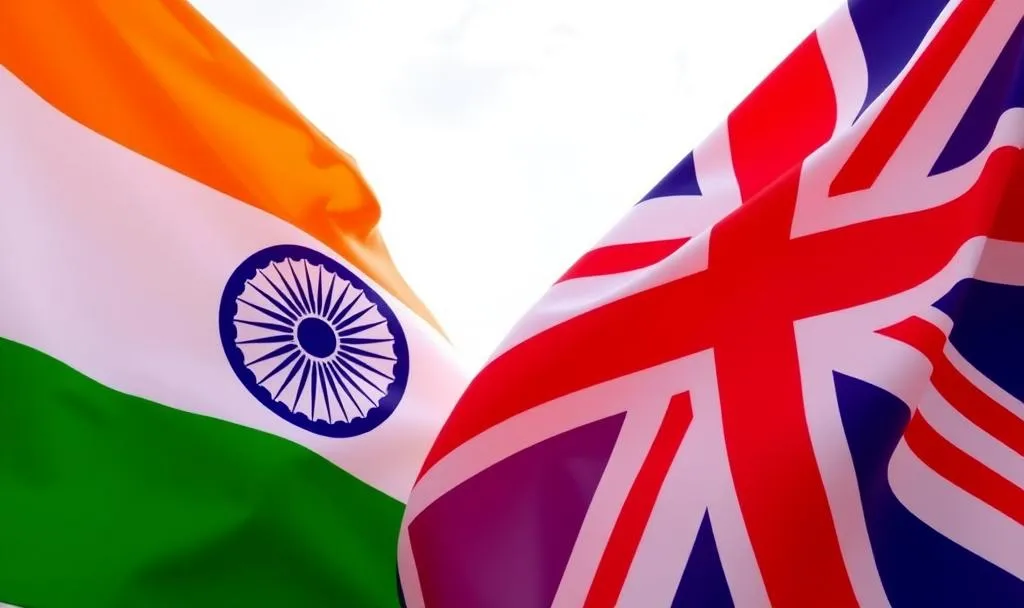
With a particular passion for India, he is working on exploring the country as both an import and export market for the UK’s arts and creative industries, building a wide network of senior stakeholders. As South Korean culture continues to dominate global entertainment, Jonathan argues it’s time for UK creative industries to turn their attention to the next cultural superpower: India’s rapidly emerging “Orange Economy.
It’s been hard to miss the rise of Hallyu. The Korean wave. Just recently it was revealed that a South Korean show has become the most watched ever on Netflix. Any guesses who it has taken over from? Yes, another South Korean show…
From record labels to museums, K-pop has been played and displayed.
But ask most creative industry executives, or arts directors, in the UK and they will tell you that much of this was reactionary. “It came from nowhere” is the common explanation. In reality, this wave has been part of a carefully planned, long-term strategic mission for successive South Korean governments. Billions of pounds have been invested, trade and diplomatic officials dispatched, while a coherent government narrative featuring creativity as true soft power has been rolled out for the world to see.
If our industries were late on South Korea, who is the next cultural powerhouse we should be turning our attention to? Enter the tiger.
With a population of 1.4 billion, an economy growing at nearly 7%, with nearly one billion smartphones, it’s now time for the UK’s creative industries to take India seriously. Just to put some context around that population figure, did you know that India has a bigger population than the entirety of Europe, the US and Nigeria put together?
And the good news? There’s still time to be part of the India story rather than, as in the South Korea case, come late to the tea party.
A fascinating Economist piece, back in 2022, argued that US/UK culture would remain dominant for years to come, but actually the opposite has happened. A teenager in South London can just as easily listen to a rapper from Mumbai as they can one from Croydon. The analysis correctly points out that we are rapidly moving from a monoculture to true multipolarity. And this is for two reasons: developing countries getting richer means more content production, and then the growth in internet adoption. And here’s where India has significant advantages, and in particular when it comes to UK/India collaboration. Those one billion smartphones are powered by some of the cheapest data plans in the world. and with a low price point comes increased accessibility. Even in the deepest villages of India, everyone is watching YouTube. According to Statista, India has the largest YouTube audience by a considerable margin. Some 491 million Indian users compared to 253 million in the US and 55 million in the UK.
And then when you throw in the eye-popping statistic that nearly 145m people in India speak English, double the total population of England itself, things get very interesting from an export perspective. Ormax estimated that in 2023 the number of Indians watching international English content has rocketed from 19.1 million pre-pandemic to 85.2 million – growth of 124% in just two years, and a number which is likely to be much higher now.
We are already starting to see organisations make their moves and this is increasingly reflected in the UK’s cultural tapestry. From a growing South Asian presence at Glastonbury to the British Museum’s Ancient India exhibition, Chila Burman’s IWM North show, which welcomed tens of thousands of visitors, to fashion label HARRI dominating London Fashion Week. And that’s before we consider the noise around Ed Sheeran and Coldplay’s Indian appearances and collaborations.
Indian culture is not just having a moment in the UK, we’re seeing a complete cultural realignment, and as a British Indian that is hugely exciting.
And this cultural realignment is being recognised at the very highest levels both in India and the UK. Earlier this year, at the inaugural WAVES Summit in India, billed as a “key forum for promoting discussions, collaboration, and innovation in the media and entertainment industry”, the Indian Prime Minister spoke about the dawn of India’s ‘Orange Economy’ with “content, creativity, and culture” as its core pillars.
He went on to say, “India’s creative economy has the potential to contribute even more to the GDP in the coming years. Today, India is becoming a global hub for film production, digital content, gaming, fashion, and music. There are numerous opportunities in the live concert-related industries as well. Today, the global animation market is worth more than 430 billion dollars, and it is expected to double. This presents a huge opportunity for India’s animation and graphic industry.”
The speech was a warm invitation to all the content companies around the world and the message could not have been clearer: India is open for cultural business.
Also speaking at the Summit was the UK DCMS Secretary of State, Lisa Nandy. Her attendance was an important signal in itself. She spoke passionately about the shared histories of India/UK and the importance of the diaspora: “Many of you here will know that there are nearly two million people of Indian descent living in the United Kingdom, and they are the living, breathing bridge between our two nations. And while Britain undoubtedly has shaped India, it is equally true that India has profoundly shaped Britain, bringing an energy, a resilience and a richness that has had an immeasurable impact on British society, culture and identity. From the biggest British band in history, the Beatles, to Great British films like ‘Bend It Like Beckham’, India has helped to define what it means to be British. We deeply value this rich contribution to our national life and to our culture”.
This was on the back of a special, and first of its kind, reception the Secretary of State hosted alongside His Excellency Vikram Doraiswami, High Commissioner of India to the UK. A jazz-afficionado and P. G. Wodehouse fan, as well as being a fantastically energetic diplomat, His Excellency has significantly shifted the dial on cultural collaboration between the two countries. (Anybody who has worked on cultural policy in the UK will recognise what a breath of fresh air it is to have someone in power who gets the arts…)
His recent Forbes interview explained why inviting artist Chila Burman to display her famous White Tiger at the High Commission was such a key moment: “Visual arts and the wider creative industries play an important and unique role in India-UK relations—from helping to share stories to driving economic growth”.
When talking about the huge potential of greater collaboration he added, “If you’re an artist or creative company in the UK and are looking to find a global audience, you need to put India at the top of your priority list. British cultural exports have long been welcomed in India—and likewise, Indian culture has enriched the UK across food, design, language, and music. There’s so much more we can do together.”
The recent appointment of Mrs Vishakha Yaduvanshi, Consul General of India based in Manchester, is also a strong signal to UK businesses and creative organisations outside of London, and she has already made time to visit cultural exhibitions… and of course Old Trafford!
Clear instructions from the top.
All of this does pose the question, are our creative companies and arts institutions ready to take chai with the tiger? You’d expect so but it is likely that we will need to see some shifts in hiring, particularly on boards and hopefully at graduate level. The economist, Shruti Rajagopalan, pulls no punches on this in her ‘why India‘ analysis: “This is no longer about diversity but about survival”. “This generation of young Indians will be the largest consumer and labor source in the knowledge and network goods economy.”
To summarise, whether you’re a record company trying to break a British artist, a theatre trying to find new audiences for your digital content or a visual artist looking for new collectors, it’s time to book a flight to India and experience the Orange Economy for yourself. Because you can’t be an ambitious content-creating business without an India strategy.
Jaipur Literature Festival anybody?