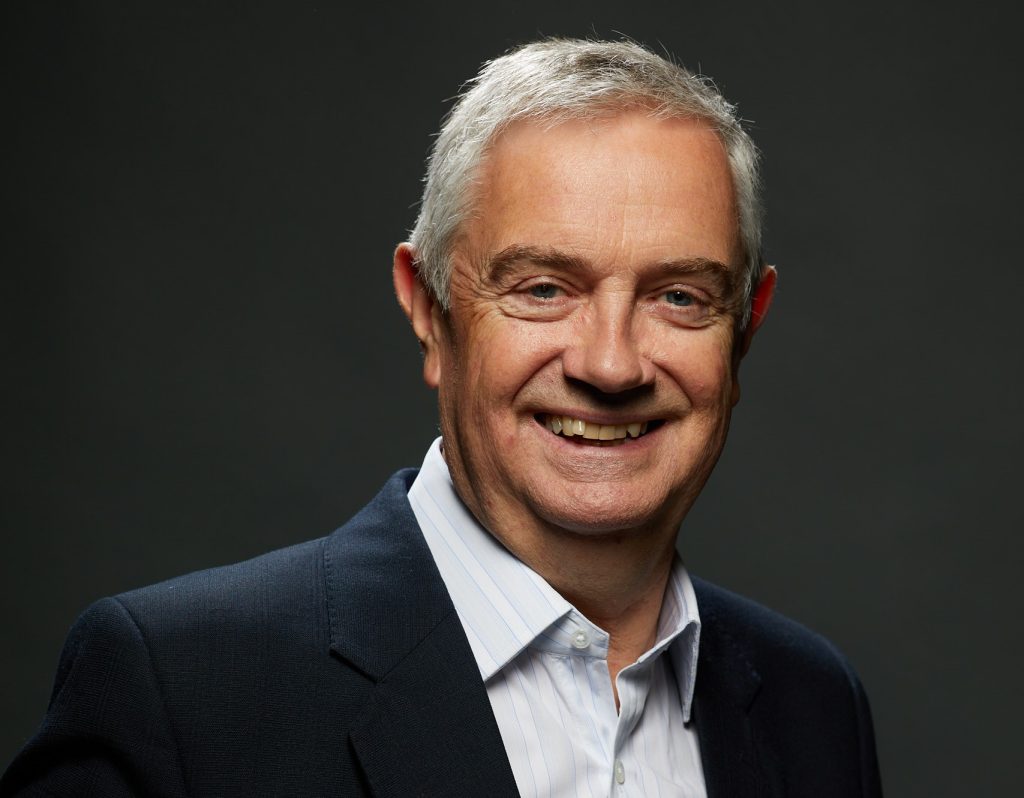

Interview by Mary Few, Partner & Head of Scotland
I recently had the privilege of speaking with Ian Funnell, Chair of NG Bailey and a seasoned leader in the engineering and energy sectors, about legacy, leadership, and the power of mindset. What followed was an honest and inspiring conversation about what it takes to lead through change, remain grounded, and help a leading family business thrive across generations.
Ian’s route into leadership
Ian’s career began with an engineering science degree at Aberdeen, though he quickly realised his passion was not in engineering itself, but in leading engineering organisations. Whilst many of his peers went into oil and gas, Ian went into utilities which he felt gave him a strong grounding in engineering.
“I got into management in my twenties,” he says. “It was about people from the start. Supporting others, getting the best out of teams, that’s what I loved.”
His journey began without a family background in engineering. A visit at age 9 to the Dounreay nuclear reactor sparked a fascination with how things worked, “they gave us a pencil sharpener shaped like the dome. I kept it for years on my desk, it was the seed of something.”
Quoting the great Miss Jean Brodie, he reflects on how one moment of inspiration can impact your life: “Give me a girl of impressionable age and she is mine for life”.
Leading a legacy business
As Chair of NG Bailey, a 104-year-old business still owned by the founding family, Ian brings a deep respect for legacy with a commitment to modern leadership. The business is transitioning now into its fifth generation.
“People think a traditional business like ours might not be relevant to today’s graduates or professionals. But our values, sustainability, development, purpose, matter now more than ever.” This value set and clear purpose is what attracts talent to a traditional business but Ian does acknowledge that leadership in the modern world has changed beyond recognition from when the business was established, and that talent now looks for more sophistication from the Board in terms of the people agenda, sustainability goals and purpose. For Ian, it is all about mindset, “if you have the right mindset, we can teach the technical skills”.
Family ownership, he believes, offers a long-term lens most companies lack. “We can move fast when needed. A supplier was going to go under and we stepped in. It made business sense, but just as importantly, it was the right thing to do. A family business lets you act with speed and principle.”
He describes his role as Chair as both strategic and deeply personal. “We’ve got about 20 shareholders but no one in the day-to-day business. I make a point of building real relationships with them. It’s like being part of an extended family. But they know the line and they trust us (the board) to deliver.”
“Always expect the unexpected. That’s leadership. Sometimes everything hits at once, change, crisis and growth. You’ve got to stay flexible, resilient and clear on your purpose.”
Navigating crisis and change
When asked how to lead through complexity and what advice he would give to leaders navigating change, Ian doesn’t sugar-coat it.
“Always expect the unexpected. That’s leadership. Sometimes everything hits at once, change, crisis and growth. You’ve got to stay flexible, resilient and clear on your purpose. And when it gets really tough, the leadership team pulls together. The non-executive Board has never been closer than during some of those moments.”
He shares lessons from his time in large corporates and utilities, where over-reacting early to a crisis was part of the job: “Deploy everything, then pull back. Better that than underestimating what’s coming.”
Ensuring that your own personal north star is aligned and clear is imperative in Ian’s view, otherwise it is almost impossible to lead others through any challenge.
When asked about resilience in leadership, Ian describes it as something that’s part instinct, part learned, and very much shaped by experience.
“There’s an element of resilience being in your DNA,” he reflects. “But it’s also built through the situations you face, where you have to overreact, act fast, make tough calls. And over time, you build that muscle memory.”
Experience gives you a mental guide: “I’ve come across this before, so this might be how I handle it this time.” But, he cautions, “Just because you’ve done it before doesn’t mean that’s how you’ll deal with it next time. Every situation brings something new.”
The combination of instinct, practice, and reflection is core to leading through uncertainty.
Important lessons learnt:
Ian shares a story from early on that has stayed with him ever since.
As a young engineer in Aberdeen, Ian worked in a traditional, hierarchical environment. There was a clear pecking order, and if you were too junior, you didn’t dare put yourself forward for roles ahead of your place.
“There was a job going that I was really interested in,” he recalls. “But I didn’t apply, I thought I knew that there were others who were more experienced, better qualified.”
However, one day, a senior departmental head stopped him and asked if he had applied for the role, Ian admitted he hadn’t as he felt underqualified. The reply stuck with him: “Just apply for it.”
“If you wait until you think you’re ready, the opportunity will be gone.”
He realised later on, when he had secured that role, that this was an unofficial moment of mentorship, and one that changed his mindset. “That conversation gave me permission to back myself and to go with my convictions”
Later, that same mentor encouraged Ian to apply for a more senior position in Edinburgh. Again, Ian hesitated, not feeling ready. But the advice was clear: “If you wait until you think you’re ready, the opportunity will be gone.”
It was a pivotal shift. “That shaped the way I’ve approached decisions ever since,” he says. “You have to tune into what you need, not just what the establishment or hierarchy says you need.”
He quotes Rabbie Burns: “O would some Power the giftie gie us, to see oursels as ithers see us.” Understanding how others see your potential can help you recognise things in yourself that you might overlook.
Today, he still values feedback and reflection. “I’ve got my annual review with our shareholders this afternoon. It’s grounding. You need to know where you are and apply the lessons you’ve picked up along the way.”
That attitude of openness and learning has stayed with him. When he transitioned from executive to non-executive roles, he took part in a ‘Coachathon’ run by the Women Leaders Association. “There were dozens of coaches giving up their time for charity”, he explains, “I found a transition coach who helped me make sense of the shift I was facing, from CEO to NED. She helped me get what was in my head into action.”
The ultimate takeaway? Be brave, seek out support and trust yourself enough to move before you think you’re ready.
Who has inspired you along the way?
Ian said he draws inspiration from a wide range of people, but not just peers or senior leaders. “Some of the most inspiring people I’ve met are our apprentices and how they view the world and our organisation with their whole career ahead of them”.
One of his favourite quotes?
“Let’s invent tomorrow instead of worrying about what happened yesterday” – Steve Jobs