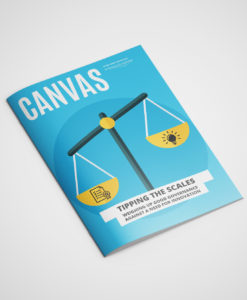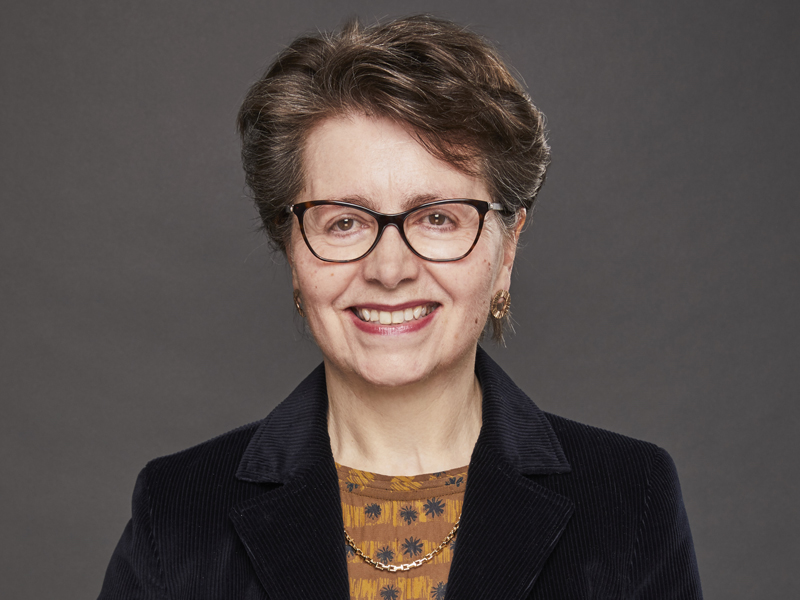
Balancing a busy executive career in law with her philanthropic endeavours as Chair of The Children’s Society, we welcome Janet Legrand as she reflects on a period that has seen great strategic change for the charity.
What made you want to use your previous experience as a leader and a lawyer in a charitable setting?
As the Senior Partner of DLA Piper, I was already involved in leading the firm’s activity around diversity and inclusion, social mobility and the development of our pro bono practice. I’ve been very fortunate to have had great opportunities in my professional career to make a difference in terms of other people’s life chances in addition to the outcomes for my professional clients. I think in a way, it’s a natural extension of this to want to reach out and support others less fortunate than yourself. I felt I’d reached a stage in my career where I had enough control over my diary to commit time to something beyond my executive job: it seemed a natural thing for me to do.
I was Senior Partner at DLA Piper between 2008 and 2012 and when I took on that role, I rather blithely announced that I would maintain my client practice. Lots of other Senior Partners got in touch at that point and said: “Good luck with that!”. And you can’t, really.
I stepped down as Senior Partner once I finished my four-year term. At that point, DLA Piper created a new position on the Board: Senior Elected Board Member. It’s a slightly unusual concept for a law firm – a bit like a Senior Independent Director in a public company – but moving into that role gave me time to resume my legal practice, which I had really missed. It also gave me time to take on some external charitable roles which is making my transition out of professional practice a smooth one.
What has given you the most pleasure as you look back over your first three years as Chair of The Children’s Society?
The thing that’s given me the most satisfaction is the strategy review that we embarked on just after I took over as Chair. It was a big piece of work that caused us to sharpen our focus and to concentrate on serving older children and young people – the 10-18-year-old age bracket – experiencing multiple disadvantage. That means that in our direct practice work, we work with young people facing huge challenges, including criminal and sexual exploitation and modern slavery.
I was pleased with the way that exercise went. We were – as a board and a senior leadership team – all very clear that this was the area of greatest need where we had deep expertise and could really make a difference. Our direct practice informs our campaigning, policy and influencing work through which we’re seeking to disrupt the cycles of disadvantage and to influence the approach of the police, politicians and others.
That seemed to me to be where our real skill set lay although it came with the recognition that it would be much grittier work and that would have implications for the organisation. I am so pleased that we are living our values and being brave about making strategic choices. Our work in this area is already having an impact. For example, police are now recognising that young people caught up in county lines drug operations are not criminals but are themselves being criminally exploited.
“I am so pleased that we are living our values and being brave about making strategic choices.”
Charities are needing to be forward-thinking as never before. How has this manifested itself in an organisation as historic as The Children’s Society and what role have the Trustees played in this?
The strategy review was a good example of the trustees playing a leading role in working with the senior leadership team to focus an organisation formed in the 19th century on the areas of greatest need for young people in the 21st century.
We’ve also changed our approach to supporter engagement. Increasingly, we’re looking at longer-term relationship building with our supporters and we’re keen to engage them more deeply in what we do as part of a wider movement for change. We put children and young people absolutely at the heart of everything we do. Informing our supporters about what we do and why enables them to become supporters of the cause in all sorts of ways: there’s so much more they can do in addition to writing a cheque (although of course financial support remains very important!).
When we looked at our approach to supporter engagement, there were things we decided to stop doing. For example, we no longer have people raising money on the street. There are obviously short-term financial consequences of that, but I think strategy is as much about deciding what you’re not going to do as what you are and staying true to your values.
How challenging is it to maintain good governance in the face of pressure to be both innovative and impact-driven in a challenging financial environment?
It’s essential to maintain good governance in order to trade through difficult times effectively. It’s vital that the senior leadership team takes the board with them and it’s important that the board has the chance to test and challenge what’s being proposed so that you can be confident the best decisions are made on an informed basis.
I think we have a really good Trustee Board at The Children’s Society, and by building a board with the right skillset and expertise we’ve made sure we have a broad range of experience that can help support the senior leadership team.
An example of that would be around evidence and impact. It’s so important, first of all, to make sure that the enterprise is actually making a difference, and secondly to ensure that in a challenging financial environment you’re able to demonstrate the impact your work is having. That is a key factor not only for the board, in assessing the effectiveness of our work, but also for engaging supporters and persuading funders to commission new services.
A couple of years ago, we set up a ‘task and finish’ group of trustees working with the senior leadership team on issues around evidence and impact. The trustees in the group have relevant experience beyond the charity sector and their input has been invaluable in helping to further improve the way the charity assesses the impact of its work.
“It comes down to having the right skills and expertise on the board as the organisation navigates choppy waters.”
I actually don’t think it’s been difficult for us to maintain good governance. Everybody recognises the importance of it. It comes down to having the right skills and expertise on the board as the organisation navigates choppy waters.
What are the key character traits and skills you look for when recruiting new board members? To what extent is diversity an issue when building a Board?
In terms of character traits, you need to recruit people with integrity and independence of thought, who are emotionally intelligent and are able to work constructively as part of a broader team. Crucially, they have to have a passion for the cause of the charity and an absolute commitment to our vision, mission and values. It’s not just about turning up to board meetings, it’s about what more you can contribute and how best you can engage to add value.
“You need to recruit people with integrity and independence of thought.”
Of course, we have a skills matrix, and you know that when you’re losing board members, you’re losing certain skills that need to be replaced. Later this year, a couple of trustees who have senior operational experience in children’s services are retiring, so we need to make sure we maintain that expertise and safeguarding experience.
I’m always considering whether there are new areas in which we need to acquire skills in order to support the senior management team. Last year, for example, we recruited trustees with expertise in digital strategy and transformation and in developing and implementing successful innovative projects. Their expertise has been hugely helpful.
I’m considering diversity all the time. It is a real focus for the charity as a social justice organisation and that absolutely has to be reflected in the board. Having a range of experiences and perspectives on the board is essential in order to come up with the best ideas and solutions and avoid ‘group think’.
In an ideal world, we would have more of an age range amongst the trustees, although younger trustees often have less control over their diaries when it comes to the time commitment of being on a board. We do, however, have young people from our services attending our board meetings, so we do have their voices in the room – and they have loud voices, and we do listen to them!
What is the secret to getting the most out of your Board – both in terms of your executive and non-executive Board members?
All our senior leadership team attend our board meetings and away days, and our board sub-committees are attended by relevant members of the senior team and the Chief Executive. I think really it all comes back to engagement and team work. It’s about building relationships beyond board meetings; getting to know people’s strengths and playing to them; and getting people involved in areas in which they have particular interest or skills and can make a strong contribution.
I spend time with everyone individually, giving and getting feedback, thanking them for the tremendous contribution they are making to the charity and trying to ensure that we are making the best of their skills and that they’re enjoying their trustee experience. We also make good use of board away days and dinners to build relationships within the board.
The Children’s Society believes in confronting ‘hard truths’. How do you think charitable organisations can be more open and transparent in the face of growing pressures around privacy?
There’s a strong push from The Charity Commission and a really strong pull from the public for charities to live their values in the way they operate internally as well as in the position they project externally and to be open and honest – particularly about when things go wrong, their failings, and what is going to be done to address them. That can only be a good thing.
Hopefully, organisations do live their values and have appropriate systems and procedures in place to address failings. When things do go wrong, and there have been a number of recent examples in which charities have found themselves under the spotlight, I think openness, honesty and transparency are key to maintaining or seeking to rebuild public trust in your work and your mission.
“Openness, honesty and transparency are key to maintaining or seeking to rebuild public trust.”
You have recently appointed Mark Russell as Chief Executive of The Children’s Society. How do you ensure that the relationship between you as Chair and a Chief Executive enables the greatest success of an organisation?
I’m very excited about Mark’s appointment. He’s been a lifetime supporter of The Children’s Society and is hugely passionate about the organisation. We’re going to benefit from the fact that this really is his dream job – he’s not just saying that! So that’s a good start.
I think the Chair and Chief Executive relationship really is key to the success of an organisation. Building a good relationship is about having a shared commitment to the values of the organisation and the delivery of its strategy and being clear about the contribution each of you need to make to ensure the organisation’s success. And again, it’s important to spend time getting to know one another so that you can hit the ground running with an understanding of one another’s strengths and weaknesses and how best to manage the relationship. We’ve already started that process, attending our Vice Chair, Bishop Libby Lane’s recent installation as Bishop of Derby together, which was a day of great pride and celebration.
“Building a good relationship is about having a shared commitment to the values of the organisation.”
Ultimately, the Chair needs to be the person who performance manages the Chief Executive, sets objectives, constructively supports him in achieving them and holds feet to the flame if necessary. If you have the right relationship and approach to motivation and inspiration, you ought to be able to do all of that in a supportive mature and non-confrontational way that enables the organisation to deliver effectively on its strategy and ensures that people are enthusiastic about their work and the contribution they are making.
JANET LEGRAND
Biography
Janet Legrand QC (Hon) is the former Senior Partner and Global Co-Chair of DLA Piper, a global law firm with turnover in excess of $2.8 billion and offices in over 40 countries. She served on her firm’s Partnership Board for 20 years whilst maintaining a substantial legal practice representing Governments in international disputes.
When she was appointed Queen’s Counsel Honoris Causa in 2018, the Lord Chancellor described her as “a pioneer in enhancing the role of women in the law, promoting social mobility, diversity and inclusion within her firm and the wider profession.” In the same year, she won the Woman Lawyer of the Year Award at the Law Society’s Excellence Awards and was presented with a Lifetime Achievement Award at the British
Legal Awards.
Beyond the law, she is Chair of the Trustee Board of The Children’s Society, Deputy Chair of Council at City, University of London and a Trustee of its Student’s Union, a member of the Audit Committee of the University of Cambridge and Deputy Chair of the Marshall Aid Commemoration Commission.