Interview with Bob Riley, Chief Executive of Manchester Camerata
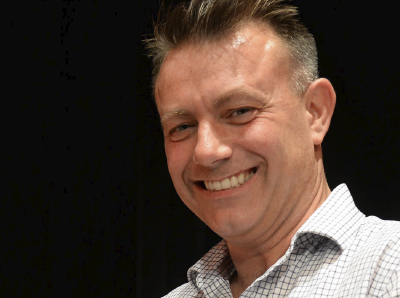
We talk to Bob Riley about the evolution of Manchester Camerata from a classical chamber orchestra into an organisation that pushes at the boundaries of everything it does, challenging expectations and keeping its audiences guessing. Bob shares details of the orchestra’s innovative dementia therapy programme and discusses whether the way we view experiential art has changed in the digital age.
Manchester Camerata was famously proclaimed as ‘probably Britain’s most adventurous orchestra’ by The Times. Can you tell me a bit about how you drive innovation in what is often considered a very traditional industry?
We decided about four or five years ago that we wanted to redefine how people perceive an orchestra, including challenging common understandings or societal norms of how, when, where and for whom an orchestra plays. So innovating at this point was about the basics – experimenting with different genres of music, artists, venues and audiences. We were curious, we took risks, mostly it worked, and we always tried to learn something.
Innovation is becoming something of an overused term though: there’s little in the world that’s truly new, it’s more about finding a different perspective through which to see things. For us, that has meant moving outside of the normal practice of having a classical music season and programme. We’ve performed different genres of music, in different spaces and with difference artists – all chosen for very specific reasons. And, perhaps most importantly, through our community programmes we’ve placed people with specific needs in the role of creator or composer. This is where I believe some of our most significant work and impact is made.
The drive for us all is in making sure we do all we can to make an impact with the people in our communities and audiences and in so doing help create a resilient organisation that is even more relevant in 10 years. We don’t get it right every time, but sometimes the mistakes can be just as rewarding in terms of the learnings they provide!
“There’s little in the world that’s truly new, it’s more about finding a different perspective through which to see things.”
Do you consider the arts to be decreasing in their importance in state education? If so, what impact is this having?
The decreasing focus on arts is a tragic and stupid move. Our principal percussionist, Janet Fulton, recently had a letter published in The Times to this effect. She argued that music should be relocated to schools’ language departments. It is possibly older than any other language, but is still used today. It brings people together, creates social cohesion and, wherever you go in the world, is understood. Language is no longer enough to serve this purpose.
I recently heard Dame Nancy Rothwell describe how creativity and digital were going to run through the heart of everything the University of Manchester does through its new initiative ‘CreativeMcr’. The idea is that the institution and others like it that will help shape society for the future will need students with a foundation in creativity and the arts.
It makes no sense to lessen focus on the arts in state education – none at all. More than this, if you watch the innate creativity in children as they play and learn, it is something that is innately there. Why would we choose NOT to encourage and grow something that we know to be hugely beneficial and that is already in existence. It’s narrow and limits what’s possible in all sorts of fields.
Should more be done to ensure that young people of all backgrounds have equal opportunities and access to the arts?
Yes! If we really mean ‘all backgrounds’ then we must continue to think more keenly and openly about how and why we want do to that and respond directly to the answers we find.
When we perform other types of music or work with other art forms, too often, I still hear “so when might they come to a classical concert?”. We have to be more selfless and let music do the rest. Of course, we’ll make everything we do open and available for anyone, but if a young rapper writes something brilliant for a group we work with and they don’t come to an event featuring Mozart, then that’s fine as well.
“Great artists who have something to say will always find new approaches and ways to do that, irrespective of age.”
Manchester Camerata is known for championing young and upcoming artists. Have you found that their approach to performance differs from that of previous generations?
Something has certainly shifted with ever increasing levels of information available digitally, both in terms of influence on artists and as a consequence their approach and style of music making and I don’t think that’s related to age. Great artists who have something to say will always find new approaches and ways to do that, irrespective of age.
At the touch of a button, artists now have access to an infinite number of influences, which allows greater autonomy than ever before to drive their own style of performance & profile. They can make their own choices about where and how they should be seen and the persona they present publicly. But does this mean their approach to performance is different? I’m not so sure.
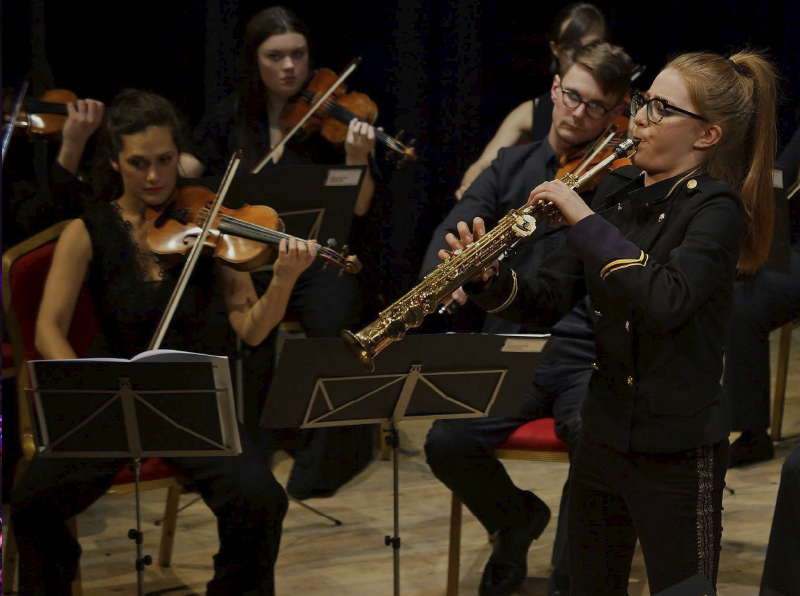
I think there’s a real resilience and flexibility in the new generation of artists coming through. We recently worked with the composer Laura Bowler to perform an intensely personal piece titled ‘Femininity’. With just a week to go, one of the solo artists pulled out and Laura worked with saxophonist Jess Gillam to rewrite the piece. It was a truly remarkable moment and showcased the level of excellence we have in British music. It was also testament to the importance of human contact in a digital age. By working together and directly communicating, Laura and Jess were able to produce an outstanding piece.
It can be very easy to assume that simply because they haven’t grown up as ‘digital natives’, more established performers don’t have access to the information their younger counterparts have at their fingertips. This is simply not true, we are just trained to focus so heavily on new talent that sometimes in that noise, we dismiss older generations.
Look at David Bowie’s Lazarus, for example. Right up to the moment of his death, Bowie was producing work the like of which we may never see again. Great artists of all ages never cease to amaze me in their approach – for instance the incredible pianist Martha Argerich’s BBC Proms performance of Liszt Piano Concerto. She’d just celebrated her 75th birthday but played with a brilliance and freshness of approach few can match.
In what ways and to what extent do you believe the prevalence of mobile devices and new technology has changed the way we view experiential art, including live music?
There are so many obvious positives about the prevalence of and use of mobile devices, but you only have to look around on the train on a morning commute to see that they can also shut us off from communicating with each other.
Of course, the tech in mobiles opens up so many opportunities for the ways in which we can experience art and live music, but let’s not forget that there’s another way. Next time you’re at a gig, why not switch it off, experience it raw, forget social media, and get stuck in analogue style?
“We are trained to focus so heavily on new talent that sometimes in that noise, we dismiss older generations.”
One of Manchester Camerata’s aims is to be a global thought leader in health and wellbeing by 2020. Can you explain a bit more about your work with communities in the North West to use music as therapy?
The aim was a bullish and an ambitious one we set ourselves some time ago, to really push us to see what it might mean to really lead thinking. It has lead to a world first PhD research collaboration (due to publish in the near future) with The University of Manchester, focusing on a programme of dementia music therapy that we run called ‘Music in Mind’. Much of the programme has been delivered in North West England, but over the last 2 years we’ve also worked in Japan, China and Taiwan to share our experiences. This has been fascinating for us to learn how other cultures view the issues surrounding dementia, and how music therapy could be used.
Manchester Camerata is also involved in a number of projects across the North of England to support people with mental health issues, autism and also working with young people in schools. And despite our lofty and ambitious aim, our work is about making a difference to individual lives.
For me, that impact is best demonstrated closer to home. Our creative and improvisatory ‘Music in Mind’ sessions are intended to help people suffering with dementia to express themselves and communicate with those around them. I was at a workshop in Tameside recently at the end of one of our projects. It was an hour long-session with carers and families, and for the duration of that hour the music never stops – our musicians simply respond to what’s happening in the room. There was one lady sitting in a wheelchair who had been in hospital for two weeks but when she heard and saw our musicians responding to her smile and the rhythm she was tapping on her knee, something clicked in her and she got up from her chair and started slowly dancing around the room.
It’s a real passion project for all of us at Manchester Camerata. I think that lady is one of the most important audience members I’ve met in the last year. It shows how important it is that we all challenge what is expected and look for ways to pass on human connectivity to those around us.
As a social enterprise, is there a challenge in terms of ensuring that you are balancing the expectations of funders with those of your audiences?
We always try to engage our funders directly in our events, community work and more, so in a way our funders are our audience. It’s one big team and partnership effort here at Camerata, and that’s been a key to our success.
Of course – there are partners who want very specific things, and we have to make sure we can deliver that, even if it’s not what some parts of our audience might want. And that’s simply about being careful to make sure mission and values are aligned at the outset of a partnership, and that what we will deliver is also very clear.
The majority of our funds (80 per cent) come from the work we do in terms of concert series, tours and performances, and partnerships in our community work. Public funders represent the other 20 per cent.
Of course, what everyone wants – funder or audience member, is for our events to inspire them and our community work to make a real impact to people’s lives. Keeping an eye on that outcome is the most important thing for us as we shape the future direction of the organisation.
You have previously been quoted as wanting to ‘redefine what an orchestra can do’. Manchester Camerata has opened the Pyramid Stage at Glastonbury and partnered with Hacienda DJs – what’s next?
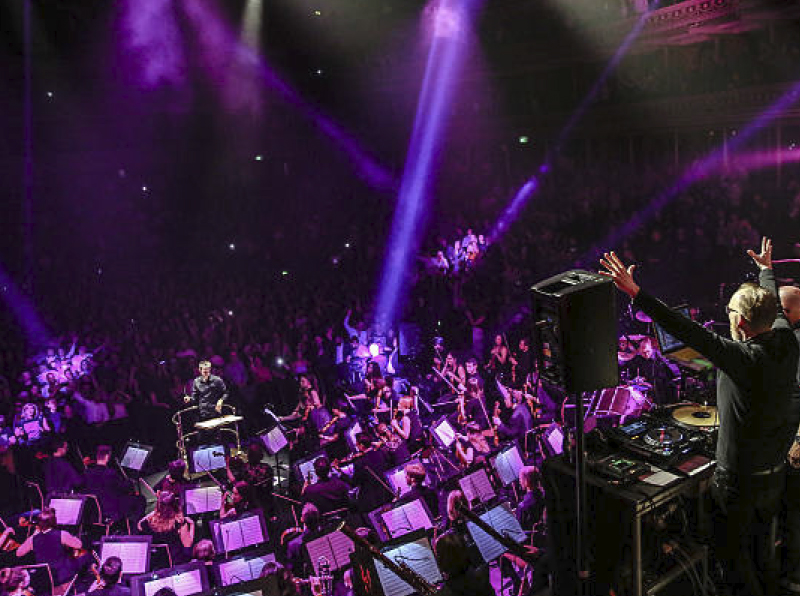
We’re always looking for new ways to push ourselves and continue the ‘redefinition’, so you can definitely expect more new projects. Our latest project, Joy Division Orchestrated, launched a couple of weeks ago and will show at The Royal Albert Hall in London this year, We are also making strong progress with an ambitious five-year legacy project, ‘Mozart, made in Manchester’, in which we will perform and record all Mozart’s piano concertos. Our work with PhD student Robyn Dowlen will be published soon and so we’re particularly excited to see what we can learn from this so that we can start thinking about the next steps for our Music in Mind programme both in terms of delivering this to communities across Greater Manchester and internationally.
We’re also delighted to be working with Laura Bowler again on a BBC co-commission. Laura visited Antarctica and recorded a variety of sounds during her trip – these will be used to create a wholly immersive experience to bring back the soundscapes of the Antarctic, including temperature, smell and light. While the entire orchestra sadly won’t be going to the Antarctic, we will be touring to Dubai and Budapest in the coming months.
Is there anything else you would like to share that’s on your mind currently?
Go and support live artists, be part of that human interaction, donate to one of the amazing arts organisations and charities near you. Those artists and organisations need support. Get stuck in and you’ll enjoy untold rewards.
Bob Riley – biography
Bob Riley Biography
Bob Riley is Chief Executive of Manchester Camerata. His work in this role is driven by the passionate belief that orchestras can transform and transport people, and make positive change in our society.
Led by Bob, the team delivered two Royal Philharmonic Society awards and one from the Association of British Orchestras, for the epic ‘Hacienda Classical’ collaboration with Hacienda Club DJs which saw the orchestra open the Pyramid Stage at Glastonbury 2017. The team’s enterprise and energy, led a world first in dementia research that directed clinical music therapists and specially trained Camerata musicians to work with people living with dementia and their carers through group music therapy. All of this is underpinned by a world class orchestra, touring, recording, and receiving the 5 stars its musicians richly deserve.
Prior to his role as CEO, Bob enjoyed a varied career as a freelance violinist and violist, working with many of the UK’s orchestras and in particular gained huge inspiration from working with Graham Vick’s Birmingham Opera Company. Alongside a playing career, Bob founded Blue Frog Music Management with colleague Fiona Sinclair, and together they toured ensembles all over Europe, he ran an orchestra, and has played for Her Majesty The Queen and performed on Top of the Pops with Kylie and more.