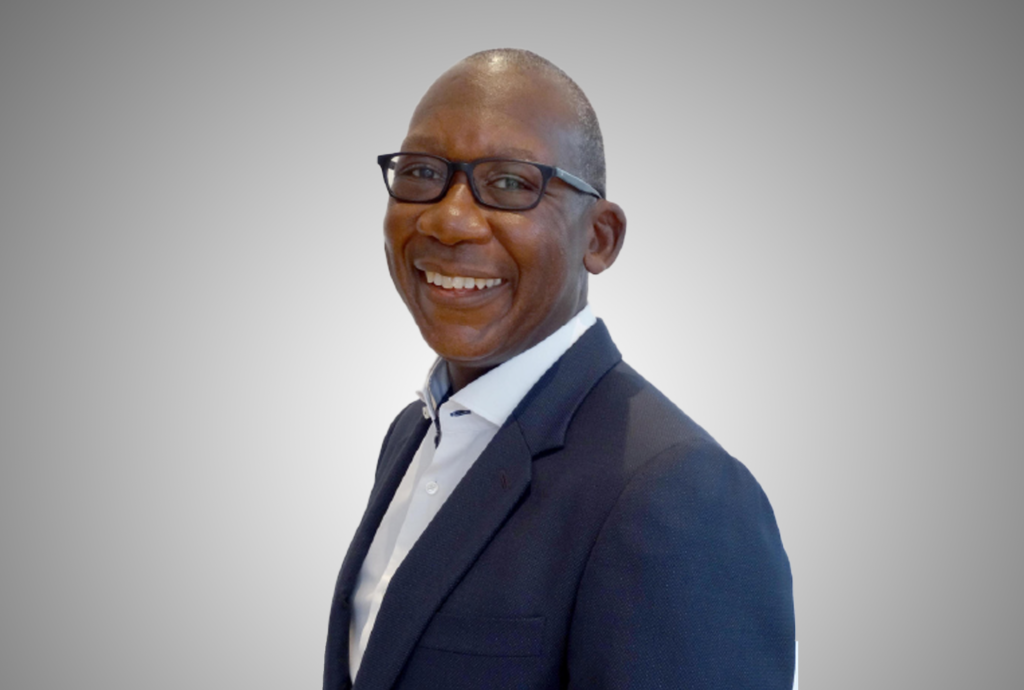
Having taken on the role of CEO at homelessness charity, St Mungo’s, in the midst of a global pandemic, we hear from Steve Douglas CBE about his hopes for the future, his highlights from his first year in the role and his ambition to end rough sleeping in the UK.
You stepped into the role of CEO at St Mungo’s in July 2020. Can you talk about the challenges of taking on a leadership role in the midst of a global pandemic? How did you address these challenges?
I’ve been a chief executive at a number of different organisations over the course of my career. I was actually at Hackney Council during the last big global pandemic [the 2009 H1N1 ‘swine flu’ pandemic], working as Executive Director of Housing and Regeneration. I saw the social care team respond to a pandemic through that time so I had a sense of the importance of getting the logistics and supplies right: you‘ve got to make sure that those connections are all as strong as possible. The big difference with this pandemic was the social isolation. Everybody was suddenly expected to remain indoors. Meeting places were not the same, you were not expected to go to offices. Arriving at a homelessness charity – whose main purpose is about engaging and directly supporting clients – was a huge difference for me.
“The challenge for me now is making sure that we still maintain the human contact.”
When I arrived in July, I was in awe of the work that our teams had already done. The pandemic had been going for two or three months and the teams within St Mungo’s had already established IT connections, working from home protocols and how best to work with clients. For me, the big challenge was how to connect with 1,500 staff across so many sites. That actually had upsides! We work across London, Brighton, Bournemouth, Bristol, Oxford, Reading – to name but a few – and it meant that I was able to connect with all of our staff much more quickly because we were using technology and not having to travel across the country. It meant that I was able to connect with so many more people in a very short period of time than would have been the case in normal times. That was a real positive, however the challenge for me now is making sure that we still maintain the human contact, as we take the benefits of remote working and that becomes part of the way that we will work going forward.
What have been some of your key highlights from your first year in the role?
The highlights are actually not mine: they’re our staff’s. During the course of the last year, we’ve managed 30 hotels: something we’ve never done before. It was a huge shift in how we typically operate. Each night, we provide support to over 3,000 individuals, but throughout the duration of the pandemic, we supported over 4,000 people who were sleeping rough or in communal night shelters to isolate safely in empty hotels or other emergency accommodation. We also managed to keep something like 93 per cent of our day-to-day services running. That level of response was a huge highlight for me.
Our recovery colleges – a digital and inclusive learning, training and employment service for clients – have been another significant highlight for me. The idea behind these is that we keep all of our clients connected and provide them with ongoing education, training, support and advice. We moved our Recovery College online during the pandemic, which had a number of benefits.
Firstly, it kept all those clients that were involved in it connected, which made a difference to their health and wellbeing. Secondly, it allowed us to develop a whole set of new learning protocols, ideas and concepts. We’ll be taking these learnings forward as part of our normal curriculum.
The other area I’m particularly proud of is our continued commitment to diversity and inclusion. This has always been really important to us, and in fact Saxton Bampfylde have helped us with the recruitment of new board members and executive team members who’ve joined us in the last few months so that we now have both a board and a top team that is truly diverse. We’ve always been strong on gender diversity, but now we’re really strong in terms of ethnicity too: in fact, 50 per cent of our executive team are now BME, as are 30 per cent of our board. They’re just incredibly talented individuals with a wide range of skills from sectors including commercial, charity, education, and housing.
How have you approached longer-term strategy setting in an environment of continuing uncertainty as we transition to the future, in light of the pandemic?
I chaired a social justice charity called Commonweal, and the big philosophy for that charity was around action learning. The principle of that is that you don’t just do research, stop, absorb and then put it out there for thought, rather you learn as you go. You take lived experience and learn, understand, and develop plans on that basis. That philosophy is one that holds true within St Mungo’s. During the last year, we took learnings from all those elements we had to put in place very quickly: managing the emergency hotels, our agile way of working and the use of technology, connecting to clients in a different way. That is all now part of our future strategy.
We had a strategic plan in place that was coming to its end in 2021 and we spent a significant part of last year developing a new strategy, which is effectively an evolution of what we’ve been doing for the last 50 plus years, but it looks to build on all we’ve learned in the last year. For example, we know we’re fantastic at services, but we know that there’s more we can do on technology both for our staff and our clients. We’ve therefore created a new executive director role which has overall responsibility for people, culture and technology (which we see as a key part of our future strategy). Similarly, we know the work we do around accommodation is so important to our clients lives, wellbeing and prosperity so again we’ve given that real attention at the top of the organisation and we now have an executive director of housing services. We’ve now got a new strategy which runs from 2021 to 2026, which is hugely ambitious. We believe that rough sleeping can be ended during that period, which echoes what government has said as a manifesto commitment. But we’re practical about what our contribution can be to that, and much of it will be about how we can support partners such as local authorities to deliver in the places where we work and how we can support influencing policy at a national level.
To what extent have you been able to apply learnings from your experience in other sectors, as you transitioned into a charity leadership role?
I’ve led or chaired perhaps eight or nine organisations through my career, ranging from tiny community-based organisations in the heart of East London, right through to national government agencies with an £8.4 billion budget. Through that, I’ve been able to see the broad range of challenges that different organisations face.
There are a couple of key learnings I always carry with me. Firstly, listen – listen and learn. Don’t assume that you know everything. There are always differences in organisations, differences in culture; differences in the way that organisations think. You’ve got to get to understand the organisation, and the best way to do that is to connect with as many people as you can: hierarchies can often get in the way of actually connecting. For me at St Mungo’s, spending as much time with our clients and understanding our services, as well as with our staff throughout the organisation, was really important.
It’s also important to keep your strategy as simple as possible. We’re a complex organisation – we both deliver services and attempt to influence policy and create empathy and understanding amongst the public – but for us at St Mungo’s, keeping it simple helps us to know what the most important things are that will help us to deliver the most difference. Keeping those messages as simple as possible makes it easier for people within the organisation to understand what it is that we hope to achieve and the contribution that they can therefore make.
How have you struck a balance in your leadership approach as you propel a long-established charity forward in an increasingly modern and technology-focused world?
The phrase “never waste a good crisis” springs to mind! If there’s something that we can take from COVID, it’s the opportunity to fundamentally look at the way that we do things. We took that opportunity even while we were delivering the services. The important thing for us now is that we capture that, and we’re doing that both within St Mungo’s through our focus on digital exclusion and promoting digital inclusion and ensuring that our clients – those with lived experience – are within every part of our governance structure. We have lived experience on the board and at executive level. Nothing we do with clients is tokenistic, that’s why we have a client advisory board which is genuinely empowered and has influence within the organisation and the opportunity to hold us to account. This has really helped us to consider what our clients need from us in terms of support to fulfil their ambitions, which can be translated back into the strategy.
That opportunity to learn from the last year, to build on the things we do so well, has been so important for us. We are also doing it at a national policy level. We asked Lord Bob Kerslake, the former head of the Civil Service, former Local Government Association President and current chair of Peabody Housing Association to chair an independent commission – the Kerslake Commission on Homelessness and Rough Sleeping – to examine what worked for people sleeping on the streets during the pandemic. He has worked with an Advisory Board of parliamentarians, politicians, practitioners and people with lived experience. We acted as secretariat to the Commission, which has just published its final report, and we hope that its recommendations will directly influence government and policy makers in the approach to ending rough sleeping.
You have openly spoken about the importance of lived experience in charities: to what extent has this impacted your approach to developing strategy and in decision making?
The challenge for us, and indeed the challenge for all charities, is establishing what impact you make. When we were developing the new strategy, we asked ourselves that question and that flows through everything now for us. When we’re talking about impact, we’re considering what difference we make. So for us, as a homelessness charity, we want to contribute to ending rough sleeping. We want to help support our clients to achieve their ambitions. If our clients have experienced being homeless and sleeping rough, we want them to have other options so they don’t return to the streets.
Being able to talk to people with lived experience and get their direct feedback on what’s worked, how long it takes, where the support might be: that’s the work that our outreach teams, our volunteers, and our locums do pretty much every day. For us, it’s then about bringing that learning into the organisation to make sure we’re delivering the right services that make the difference.
Last year, we provided more than 200 different services, ranging from mental health support and advice, through to long-term care or very short-term advice on options; right the way through to those who need employment advice, skills or training. That’s where the recovery colleges come in: they focus on ensuring that our clients are able to get access to jobs and training. Understanding what services make the most difference is what is really crucial for us, and you only truly know if you are connecting and getting input from those you are supporting or working with.
Our new strategic plan has direct input from clients, and that gives me confidence that our strategy is focused on things that matter to our current and future clients.
In the last year we’ve evolved our established Client Advisory Board, to challenge us on performance, and also to help us in learning what works. Over 10% of our staff have lived experience of homelessness, and that experience is embedded across all levels of the organisation. I’m pleased they feel able to share their experiences and expertise to really add value in how we deliver services.
We see digital offering so much opportunity, but how can we prevent digital exclusion from increasing the challenges for those in our communities who are most disadvantaged? Is St Mungo’s doing anything particular to combat this?
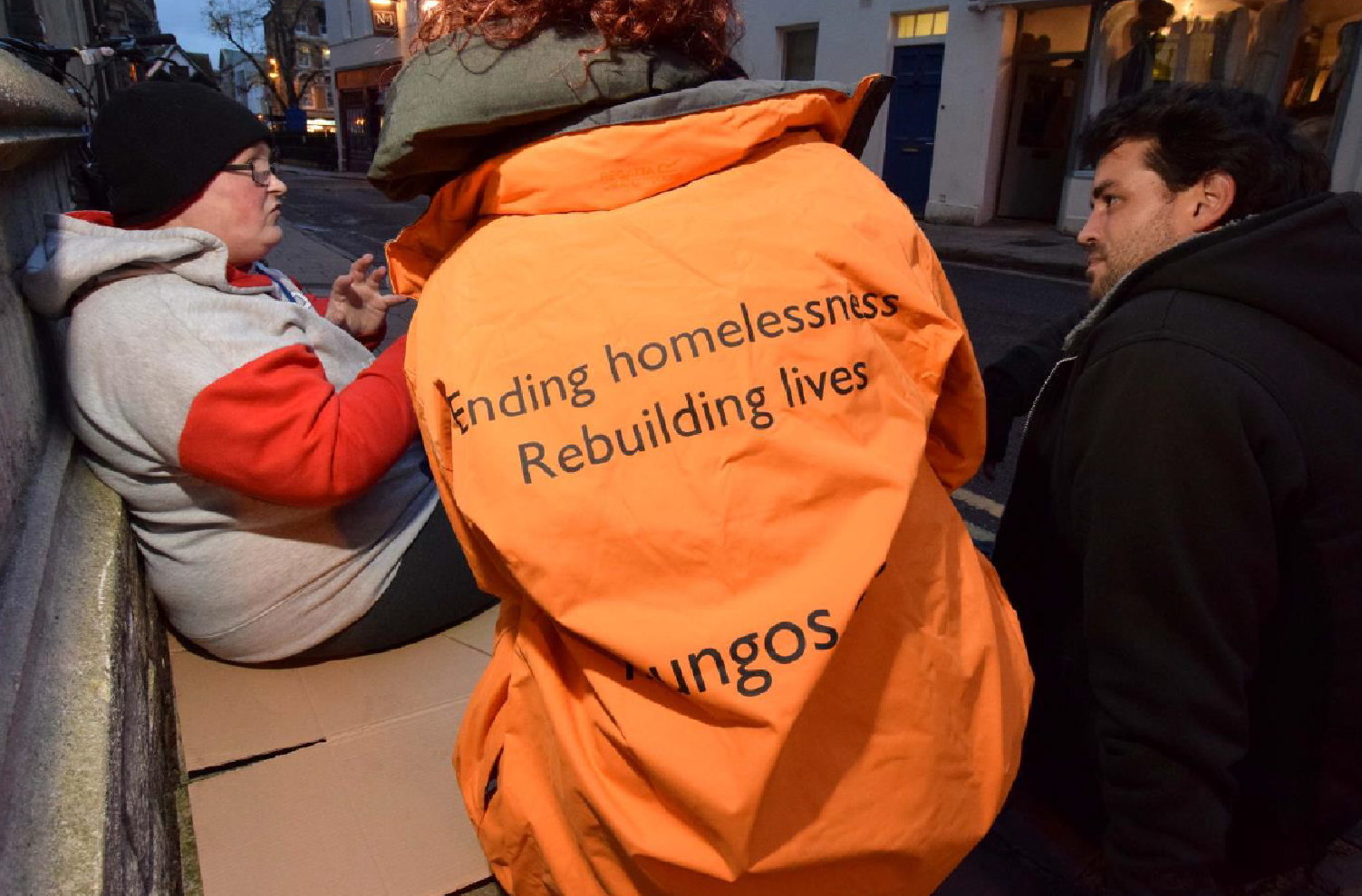
Our recovery colleges are now an important part of our strategy to tackle digital exclusion. Our colleges are non-statutory, so the way we develop them is through donations and support from funders. We have some significant funders who have been brilliant in offering support to us and our clients and helping us to tackle the disadvantages our clients may face through digital exclusion. That includes access to technology. The fact that many of our clients don’t have mobile phones or access to the internet both means they can’t access benefits – just getting into the system to understand what they might be entitled to is impossible without that connection – and that they can’t contact friends and family or support networks. Making sure that at the very start our clients have at least got access to technology is so important.
We’ve had huge support from organisations like Tesco Mobile and Clarion Housing Group. They provided mobile phones which we could then provide to the clients who needed them most, which made a huge difference. In terms of opening worlds and opportunities, mobile phones are so significant, and yet we now almost take them for granted.
Of course, the second area is knowing your way around the technology. That’s hugely important for things like accessing benefits, but also for employment skills for the future. We know that the world is now a digitally technological one, so making sure our clients are as well-equipped as they can be to work in that world, to operate in that world, is crucial for us.
“The history that we have chosen to hold on to is our ambition and vision. The evolution is around our impact.”
In many ways, making a well-established organisation fit-for-purpose is more challenging than starting something from scratch. Are there ways you have found to change some of the legacy challenges into positives?
We are perhaps different as a charity in that we’ve been evolving continuously. The current incarnation of St Mungo’s is only about five years old and was the result of the coming together of two organisations: St Mungo’s and Broadway. Bringing those two organisations together culturally is what we’ve been working through over the last five years. The new execs bring a freshness culturally as they don’t know the historical and legacy differences and the integration that’s taken place over the last few years. They see the organisation as it stands today rather than its historic iterations.
The history that we have chosen to hold on to is our ambition and vision. The evolution is around our impact. We are now confident enough to ask ourselves; “have we made the biggest impact we can make and what can we do differently?”. And because we’re able to do that, we’re able to increase our contributions to partners on solutions.
“Though there are challenges, I’m optimistic because the last 15 months showed that street homelessness can be ended.”
I suppose this is part of my civil servant type experience, but I come with an inquisitive mindset. I always want to ask; “why?”. Why do we do that in that way, could we do it in a different way in 2021 to how we might have done it in 2018 or 2010? For St Mungo’s and homelessness charities more generally, the last time we got street homelessness down to a level where we felt that it was almost eradicated was around 2010, so we’re now trying to look back and see what the ingredients of that time were that allowed us to get to that point. What’s happened in the last decade? What can we learn going forward? Our contribution to the Kerslake Commission is all about what we have learned and sharing the experience of our clients, our staff, and our many volunteers. We have to ensure that those lessons become part of the way that we collaborate and work together to address homelessness. That is our philosophy. We have the experience of working with approximately 33,000 people every year, through the ‘Everyone In’ initiative bringing people off the streets during the pandemic; the lived experience of those individuals. We now need to take that with the shared learnings from across the sector to come up with something that together will help us to prevent homelessness. We see ourselves as a contributor, working alongside other organisations to prevent and ultimately end street homelessness.
Finally, what gives you most hope for the future and most optimism in your role leading St Mungo’s?
Though there are challenges, I’m optimistic because the last 15 months showed that street homelessness can be ended. The unprecedented collaboration between different agencies, including local government, health and housing associations, to provide advice, support and accommodation options was all there. It worked in spite of the system at times, and I believe that if we get the system right, and the funding to support it, that our ambition can be achieved. But we won’t do that on our own. We’ll do that supporting local, regional and national government. We’ll do that working in collaboration with other agencies and providing our support, our advice and our expertise where we can.
We’ll do it by working together, and in fact the Kerslake Commission’s first interim report is called “When We Work Together”, which is a philosophy we wholeheartedly endorse. We believe that society and our clients deserve to get rid of the scourge of a person who is homeless person having to sleep on the streets. That should not be the case in 2021. It’s tough for charities – the financial environment in which they’re working adds to that challenge – but we know that public support is so strong. We now need political will to support it, but I’m optimistic that the opportunity will be seized, because we know it can be done.

Steve Douglas CBE
Biography
After a long career in social housing, leading a number of housing associations, both as CEO and as a chair and vice chair of two of London’s g15 largest social housing providers, Steve took over as CEO of St Mungo’s in July 2020, having also been chair and Trustee of the social justice charity, Commonweal.
St Mungo’s is a leading homelessness charity, and each year provides services to almost 33,000 clients, and over 3,500 clients each day. During the pandemic the charity ran 30 hotels, supporting almost 4,000 clients, working with local authority and health partners on provision of accommodation and support to those who were rough sleeping or at risk of rough sleeping, across London, the South East and South West. Steve has also been the Chief Executive of the Housing Corporation, the predecessor to Homes England and the Regulator of Social, when the non-departmental public body had responsibility for both the investment and regulation of social housing provision. Steve was awarded a CBE in 2019, for his services to housing and diversity.