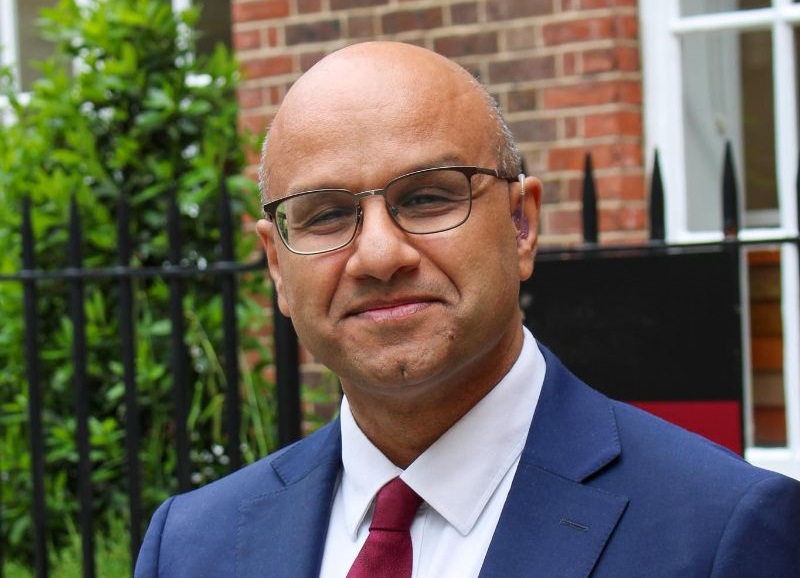
An interview with Dr Mohammad Al-Ubaydli, Founder and CEO of Patients Know Best
As co-founder and CEO of Patients Know Best (PKB), Dr Mohammad Al-Ubaydli has long championed the role of patients as active participants in their care. Trained as a physician at the University of Cambridge, with research experience at the US National Institutes of Health and consultancy work with The Advisory Board Company, Dr Al-Ubaydli brings a distinctive perspective to the intersection of medicine, data and digital transformation. In this conversation, he reflects on the NHS’s journey from analogue to digital, the lessons behind PKB’s integration into the NHS App, and what the next decade of healthcare might look like.
The government has identified ‘from analogue to digital’ as one of the major shifts they want to see as part of NHS reform. How do you see the increased use of technology supporting the NHS’s relationship with patients?
It’s essential—not just as an opportunity, but as a necessity. The sheer number of people relying on the NHS simply cannot be supported by the current workforce without the help of digital tools. Fortunately, UK patients are digitally ready. As an example, the UK has the second-highest rate of online retail usage globally, after China, and one of the most densely populated catchments—50 million people within 200 kilometres of Northampton. It’s fertile ground for digital transformation.
Moreover, we’re now seeing apps that can detect early signs of conditions such as Parkinson’s through voice patterns or gait analysis—well before traditional clinical diagnosis. This is not just about efficiency; it’s about earlier, better and more scalable care.
But while the public is ready, the challenge lies with professional readiness. There are many digital innovations that are simply not possible in an analogue environment.
Patients Know Best became the first personal health record to be fully integrated into the NHS App. What were the key steps that contributed to this successful collaboration?
The most important factor was the support from our NHS hospital users. They went directly to central government to advocate for their patients. That grassroots demand was critical.
There was also a lot of technical navigation involved. For example, PKB used a higher level of encryption than many systems at that time, so to integrate with the NHS App, the government had to invest in matching that level of security. This change was only possible thanks to champions at NHS provider level who believed that investment in this change would make a tangible difference for patients. They did so using open standards so others could benefit too, which was a significant enabler.
But beyond the technicalities, it was about urgency and partnership. Frontline providers weren’t asking for a ten-year roadmap—they needed this now. The success wasn’t driven by PKB alone; it was a collective push from clinicians who saw the benefit for their patients. Internally, my colleagues often led the charge—sometimes overriding my own scepticism. That taught me a great deal about listening and trusting the team to pursue the ideas that matter.
“When the NHS App team procures on behalf of UK citizens, they do so with significant scale and responsibility. To be part of that, innovators must demonstrate both quality and patience. The NHS’s name is at stake, and the bar for integration is rightly high.”
In your article on the NHS App’s success, you mention the importance of governance and integration of private sector innovations. How has this approach influenced Patients Know Best’s strategy in partnering with the NHS, and what lessons can be applied to future collaborations?
We’ve always taken a quiet, strategic approach to working with government. When the NHS App team procures on behalf of UK citizens, they do so with significant scale and responsibility. To be part of that, innovators must demonstrate both quality and patience. The NHS’s name is at stake, and the bar for integration is rightly high.
Operating in the NHS has trained us to meet a high standard—delivering at scale, with low pricing and high service levels. That’s in stark contrast to some international companies, where pricing is often high and service inconsistent. Having proven ourselves in the UK, we’re now taking those capabilities to other countries that are more accustomed to the US model. The NHS has been our proving ground.
It reminds me of something Ridley Scott once said about starting his career in British advertising, competing with the BBC. Because he had to compete at such a high level from the outset, it shaped the quality of everything he did afterwards. That’s how we see our experience with the NHS—intense, demanding, and transformative.
What advice would you offer to other leaders hoping to build successful digital health partnerships with the NHS?
Above all: patience. You must plan for a long business cycle and manage your cash flow accordingly. Most investors expect rapid returns, but that model doesn’t work in healthcare—and it certainly doesn’t work in the NHS. At some point, you’ll reach a tipping point where usage spikes and data scales up, but it takes time to get there.
In our case, many early investors passed on PKB because of the long-term horizon. But that same frugality helped us survive long enough to find the right partners—people who understood our model and shared our vision. In the US, there’s been significant investment in digital health, but recent analyses show that returns have been poor. Many strategies simply haven’t worked. Ours did, because we matched mission with patience.
“Everyone recognises that the current model is not just ineffective—it’s unsustainable. The change is coming, and it will be digital.”
Looking ahead to the next decade, how do you think healthcare will—and should—evolve?
Everyone wants to move from treating illness to promoting health. But no one has fully cracked that model yet, even though we cannot afford not to. Prevention is the goal, but making it affordable and accessible at scale is a major challenge.
I believe we need a citizenry capable of looking after their own health—proactive, informed and supported. For that to happen, people need access to their own data, and innovators who can help them make sense of it. That’s the future we’re working towards.
Governments around the world have now received this message. In the last six months alone, I’ve seen a surge in procurements focused on patient-centred digital health. Everyone recognises that the current model is not just ineffective—it’s unsustainable. The change is coming, and it will be digital.