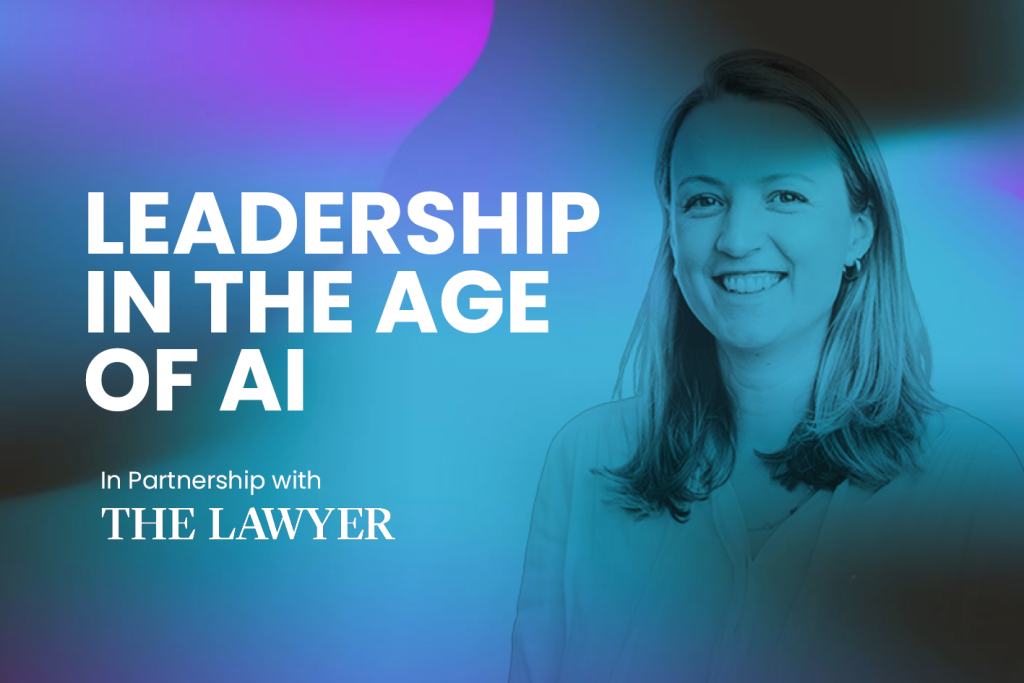
Mary Few, Head of Scotland Office and Consultant at Saxton Bampfylde, shares her insights on how AI is reshaping legal leadership and talent in this featured interview from The Lawyer’s report “The AI Advantage: Rethinking Legal Talent and Delivery”. Drawing from her extensive work with legal leadership across the sector, Mary explores the cultural shifts, career pathway transformations, and strategic imperatives that will define the future of law firms in an AI-enabled world.
You’re in close contact with legal leadership across the board – what’s the general mood you’re picking up around AI? Is it excitement, nervousness, or a bit of both?
There’s a definite sense of urgency – a recognition that AI isn’t knocking on the front door; it’s marched right into the front room. The mood is a mix of excitement and strategic concern. Leaders know AI can dramatically enhance productivity and unlock new value for clients. But they’re also acutely aware of the operational and cultural shifts needed to realise that potential. The most forward-thinking firms aren’t waiting for the definitive playbook – they’re experimenting, learning in real time, and using that momentum to build competitive advantage.
One of the concerns is that a by-product of AI might be that junior roles could shrink over time. How do you think that affects the traditional route to partnership – and how are firms starting to rethink those pathways?
AI is fundamentally redrawing the map of legal careers. The linear route to partnership – built on years of document-heavy work – is being disrupted. That’s forcing firms to reimagine how they nurture talent. That may see a pivot toward early exposure to client strategy, innovation projects, and leadership development. In effect, future partners may be shaped more by their agility and mindset than by how long they’ve served in a particular role. That’s a radical cultural shift.
The issue of culture comes up a lot in the report – especially the way in which leadership style and firm values can really shape how successfully firms adapt to AI. From what you’ve seen, what are the signs that a firm’s culture is genuinely ready for this kind of change? Are there red or green flags you tend to notice early on?
Culture is the beating heart behind every successful transformation. Firms that are ready for change tend to have a few things in common: their leadership invites challenge, they reward curiosity, and they move fast on ideas that show promise. In particular, they aren’t scared of trying new things. They don’t just talk about innovation – they fund it, staff it, and give it strategic weight. On the flip side, where we see resistance, it’s usually because risk aversion has become institutionalised. If change is seen as a threat to legacy power structures, that’s a red flag – and it often shows up early in leadership behaviour.
There’s a growing feeling that law schools need to start embedding AI and digital skills much earlier. Do you think that’s going to change how firms think about hiring – maybe even what they’re looking for in a standout candidate? Will firms start valuing tech-savvy mindsets as much as a stellar academic record?
The definition of ‘top talent’ is evolving. Academic excellence may earn you the passport, but thriving in today’s legal world demands AI literacy as your compass. Firms are now actively looking for digital fluency, adaptability, and entrepreneurial thinking. The best candidates will be those who ask how technology can enhance outcomes, not just how to apply the law. As AI becomes more integrated into legal work, we’ll see firms valuing multidimensional skill sets – where legal, technical, and human intelligence intersect.
The data shows not every firm has embedded innovation deeply – some are still treating it like a side project. From your perspective, what sets the more forward-looking firms apart?
The difference is mindset. Progressive firms treat innovation as a strategic priority – not an initiative, but a core business function. It’s visible in how they allocate capital, promote people, and structure teams. Their leaders don’t just endorse innovation; they embody it. These firms are constantly scanning the horizon, engaging their people in the process, and moving quickly on insights. Innovation isn’t on the edges – it’s woven into the fabric.
There’s a real concern about AI making legal services feel more samey. So when you think about brand identity and culture, especially from a talent point of view, how can firms stand out in this new AI-enabled world? Is leadership style part of what makes a firm feel truly different to work for and with?Absolutely. In many ways leadership is becoming the brand. In a world where core services risk becoming commoditised, the firm’s identity – how it leads, how it listens, how it innovates – becomes the real differentiator. Talented people want to work in places where they feel part of something future-facing and human. Clients want the same. The firms that will stand out are those where leadership is visible, values-driven, and unafraid to define a distinctive path forward. That’s what makes a firm memorable – and magnetic.
Read: The AI Advantage: Rethinking Legal Talent and Delivery